
Podcast Episode
How to Turn Everyday Stories into Clients on LinkedIn
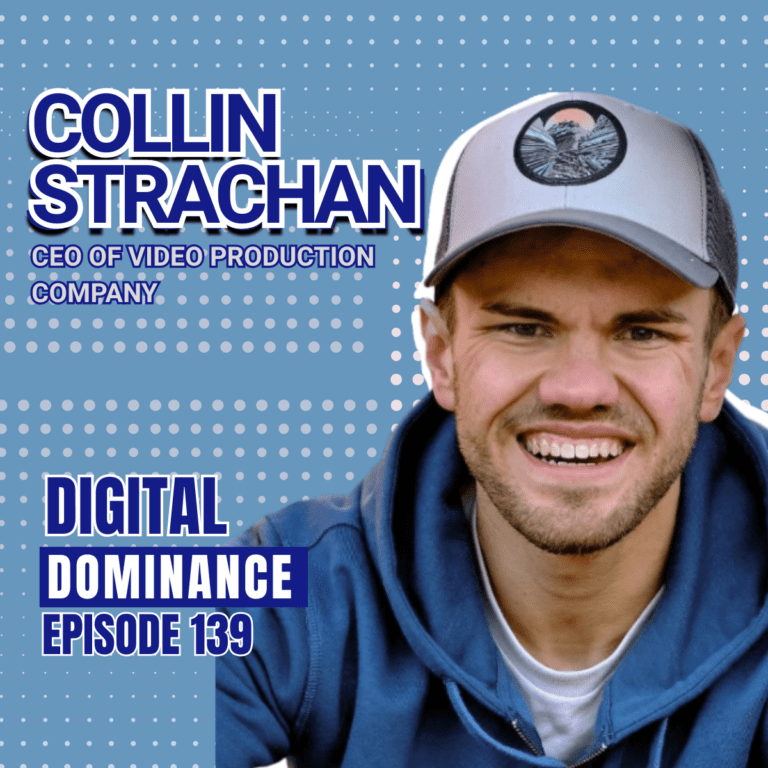
Collin Strachan
Episode Notes
Summary
In this conversation, Colin Strachan shares insights on building a magnetic personal brand through storytelling, particularly on LinkedIn. He emphasizes that anyone can create engaging content by focusing on specific, relatable experiences rather than sensational stories. Colin introduces the PISS framework, which stands for Promise, Interest, Story, and Stakes, to help structure content that resonates with audiences. He also discusses the importance of social proof and how to convert engagement into business opportunities. Throughout the conversation, Colin encourages listeners to find their voice and share their experiences authentically.
Takeaways
- You don’t need a wild origin story to stand out.
- Storytelling is a skill worth mastering for connection.
- Specific stories resonate more than sensational ones.
- The PISS framework helps structure engaging content.
- Your LinkedIn profile should act as a funnel, not a resume.
- Social proof is crucial for driving sales.
- Building a community is essential for growth.
- Start sharing your experiences to find your voice.
- Balance asking for sales with providing value.
- Successful content starts with a strong hook.
Chapters
00:00 Introduction to Colin Strachan’s Journey
02:49 The Art of Storytelling in Content Creation
05:58 Finding Your Unique Voice and Perspective
08:54 The PISS Framework for Engaging Content
11:55 Building a Magnetic Personal Brand on LinkedIn
14:47 Transforming Stories into Business Opportunities
18:08 Overcoming Awkwardness in Sharing Personal Stories
20:50 Patterns of Successful Content on LinkedIn
23:52 Common Misunderstandings About LinkedIn
Links
https://www.skool.com/become-unforgettable/about?ref=a02a5cb385764eb7aaf16744760c8f83
Free High-Converting Website Checklist: FroBro.com/Checklist
Transcript
Jeffro (00:02.377)
If you think you need a wild origin story to stand out on LinkedIn, think again. Colin Strawn is my guest today. He is the guy who builds viral content in extreme Alaskan conditions and somehow makes it look easy. But he also teaches founders, creators and professionals how to turn their everyday experiences into content that connects and converts. His posts have racked up over 5 million views, six figures in revenue, all while he’s living off grid, running a video production company with his wife and raising kids in the Alaskan wilderness. I also heard he recently became the godfather of a bear cub But that may be a rumor that I just started in this episode We’re gonna get into the nuts and bolts of how you can build a magnetic personal brand Even if you don’t think you have anything special to say so thanks for being here Colin. Welcome to the show
Collin Strachan (00:46.552)
Thank you so much man. Yeah, I completely agree with that sentiment. That’s what I want you to come away with. If you’re listening to this, there is just absolutely hope. So let’s jump into it, man.
Jeffro (00:58.995)
Awesome. Well, folks, he didn’t deny the Godfather claim. So I think that’s that’s proof that it’s All right, Colin, well, before we get into the storytelling frameworks and the LinkedIn strategy, I was curious, how many months out of the year are you fully off grid?
Collin Strachan (01:03.832)
No, that’s a rumor we should just, we’ll just let that fly. That’s a good one.
Collin Strachan (01:16.652)
Yeah, that is a good question. The number has decreased over time. Obviously I’ve got a Christmas tree and stuff like that behind me, more in a house. So this is, this is the first year that we haven’t been in our Airstream full time. So we traveled around in an Airstream off grid for about six years. And now that we have two kids that kind of like came to an end. So we did it this summer with the two and then we thought we’re not going to do like an off grid winter. So we’re headed into a new season.
So now it will figure out it’s going to be something like maybe three months a year. We’ll travel around in it or maybe we’ll just do trips or whatever. But I did it for six years. So there you go.
Jeffro (01:55.127)
That’s a long time, yeah. I mean, tell us about what is it like going from creating some viral ad campaign to then you’re chopping firewood between Zoom calls? like, what does that actually look like?
Collin Strachan (01:56.396)
Hahaha!
Collin Strachan (02:05.706)
Yeah, precisely that. know, it kind of a mix, you know, leaning on the story of doing that crazy stuff is what it actually looked like. but yeah, I mean, you know, some of our craziest stuff in the winter, it looked like we’re like chainsawing through a frozen lake and pulling water out to filter it and, you know, chopping wood and then the light is just right. So you gear up and you go out and shoot or you get on a helicopter out to the glacier or whatever it was. But so was like this mix of like really cool creative stuff with just like primal survival all in the same day. Yeah.
Jeffro (02:44.651)
That’s kind of crazy. A lot of different areas you got to focus and keep your head on straight. Otherwise you’re going to get behind, I think.
Collin Strachan (02:52.076)
Yeah, yeah. Yeah, I mean, you got to, it makes it a little bit hard at times because the primal survival stuff has to come first. Like you got to have like heat and food and water and all that type of stuff. But just systems, just, you know, like any type of business, you just got to have a routine. You got to stick with it and get the stuff done.
Jeffro (03:10.676)
Yeah, well, that makes sense. And it seems like it gave you lot of good stories to tell, because I’ve seen you tell a lot of stories from your time off-grid in Alaska. let’s talk about what actually drew you to storytelling as a skill worth mastering. Was there some moment in time where you realized, hey, I need to focus on this thing because it’s actually working?
Collin Strachan (03:18.349)
Yeah.
Collin Strachan (03:30.478)
There’s not a cinematic, if someone goes and makes a movie in my life, they’re gonna have to write a scene where it clicks just to make it more dramatic. it’s kind of like coming to that realization and being led while also discovering all at once type of stuff over the course of my life. like anyone, we all like movies and stories and books and stuff like that. I always had more of a creative bent.
I wasn’t super active growing up and had some health stuff, so I wasn’t out playing sports and stuff like that. So you were more likely to find me with a camera or a guitar or something like that in my hand. just the practice and the way life goes, that’s what I ended up more led toward. And then kind of as I went into my career, just the opportunities that came up, typically I ended up making money around you know, marketing or photography or these different types of things. So once you start doing that, especially if you go into entrepreneurship and you’re doing it for yourself, what you have to figure out is how to ultimately like turn those stories into money. So if you’re working for someone else, then maybe you get some experience with that. But if that’s required to put food on the table, then you’re forced to figure it out or bail on the plan. So I would say that that’s probably that crux moment is going into to work for myself eight years ago now made it completely necessary that I learned this skill so I can do it for myself, not to mention my clients.
Jeffro (05:11.359)
Well, yeah, and that’s an important distinction. I think a lot of people find that they’re really good at doing something for their clients. Like I could build amazing website for my client, then I go to build my own website and I’m like, why can’t this doesn’t feel right? I can’t quite get there is the whole cobblers children have no shoes problem, right? So how did you get past that? Was it like a mental barrier or did it or was this not a problem for you? You were just able to do it for yourself from day one.
Collin Strachan (05:25.526)
Yeah, yeah.
Collin Strachan (05:34.38)
Yeah, no, absolutely not able to do it from ourselves from day one. And there’s been a lot of struggle and heartache along the way. this was more of a crux moment. There was, there was, just kind of a day, a number of years ago. and so we’ve had a wandering path. I was at a marketing agency in Dallas was my last actual W2 that I had now we’re in Alaska. So you got to connect the dots between here and there. and, my, my wife and I decided to win, wanted to start doing some traveling. She was a nurse, so she started to travel nursing and I was doing like, you know, corporate photo video stuff on my own. When I left that role, and we ended up just in these really beautiful places and wanted to do was kind of like right before the whole like van life influencer thing took off. So we were kind of like some of the earlier people there. And so we we just started doing photo video of adventures and really, really cool places mostly focused on the outdoor market, which is less where we’re focused now. And so yeah, what we realized when we were marketing that, when we would connect with brands, when we would do a crap ton of gold emails, whatever it was, the thing that really resonated with people is when we just told our story. So the question that we started asking is that that client that we want to buy from us, sign up, whatever it was, like they’re sitting theoretically in an office somewhere, maybe they’re in their 20s or 30s, whatever it you got to define who they are and figure out what might they want to feel more than you know, how can we just call out a pain point and make them feel like they need the solution or whatever it was, how can we make them feel inspired, excited, connected, like they’re going to be a part of this thing that we do. And that kind of was the light bulb moment for us that allowed us to start building is we stopped leading with features or pain points or whatever it was and started leading with story when we sold. And so, you we would we would say, hey, you know, we’re in Alaska, the snow is down, our air stream is, you know, tucked into the mountains and we’re on these adventures and.
Collin Strachan (07:42.584)
we’re doing winter in Alaska product shoots and boom, boom, boom, here’s what it looks like. Do you want to do it? But it was more like, by the way, you can sign up for this thing, but do you want to join us in this? You want to be a part of this moment in time and this thing that we’re creating? And that’s what people resonated with. And that’s ultimately the approach that I’ve brought to building my LinkedIn. discovery born by necessity and hunger, ultimately.
Jeffro (08:10.681)
Well, I like and that kind of brings me to my next question because you’ve said that you don’t need a crazy story. You just need a specific one. And I kind of get that the way you were talking about thinking who’s on the other side. So can you break that down for us and give us an example of how boring but specific might be generic but impressive?
Collin Strachan (08:17.292)
Yeah.
Collin Strachan (08:29.078)
Yeah, so Sarah works at an HVAC company in a small town about 45 minutes outside of Dallas. It takes 30 minutes to drive that five miles to work. In the rush hour traffic, you can see the tail lights and the red lights and green lights. She gets in, you know, the beige walls, the texture on the wall, that hum of the AC, the kind of like seven degrees sounds nice, but when it’s 70 degrees inside, that’s actually pretty chilly. She sits down on her computer. It’s about 10 years old and it’s a little blocky and slow to boot up. She notices that her co-worker is looking a little stressed out and goes over and the story goes on, but you feel every part of that story. You know what I’m saying. You feel the traffic. You feel the little headache in the morning, the cold. So what I’m trying to do is bring you into a moment that you can relate with and that maybe you can see yourself with. So that’s kind of an example that I tell people like when you’re writing, when you’re marketing, when you’re trying to bring someone into an experience that you offer, What we’re looking for is emotions and experience and visual language that they can resonate with more than sensationalism. Now, sensationalism does work well. So I lived off-grade in Alaska. I’m building a production company, whatever it is. That stuff captures attention, but it’s not necessary. And it’s no more or less effective than just the fact that I’m really, really specific about it.
So the way that I see that play out, I think one of the most potentially boring cohorts of people that I teach in my community who go and crush it on LinkedIn is financial advisors. So financial advisors, they’re not running hedge funds. They’re not day trader. Like there’s nothing special. They’re literally just like the ABCs of, you working with money, and they’re highly, highly regulated. So they can’t make sensational claims, they can’t promise success or whatever it is, but they’ve got to show up and have some sort of personality and flavor on LinkedIn. And when they figure that out, ultimately, kind of what they hone in on is a specific type of person. So some people help
Collin Strachan (10:31.672)
people like, yeah, I’ve been in my post career now. And I help people in their 50s, you know, plan for retirement in the next 10 years. And that’s my whole shtick. Or I was a high school coach. And I just think about, you know, money and personal finance, and the way that I, you know, work with my clients from a coaching perspective, or whatever it is, but they get super, super specific about the things that they do. They define who their customer is. So they’ll say, you know, a 38 year old with $250,000 in there 401k and trying to do this and they just say before and after and here’s what we figured out whatever these posts will get like 250 350,000 impressions just because they’re interesting and they’re super relatable because like oh I’m in a similar situation or oh I’ve wondered about that whatever it is so I don’t know if I’m rambling too much or answering your question but it’s not about having a crazy story it’s about just kind of creating windows into your experience and what you’ve done that people go, I see something like in myself there, I can relate to that, or I can feel that, or whatever it is. And it goes deeper with how to put frameworks to those stories and stuff like that. But that’s the thing that I’m getting at. And that story that I led with is proof that I can capture your attention and really immerse you into an experience that’s otherwise very, very bland and boring.
Jeffro (11:51.442)
Yeah, well there’s a key part of that, right? You can tell a story, but then at the end of it, if you want someone to take an action to contact you or something, that is a, I don’t know if that’s a separate art or if that’s part of the process, but yeah, maybe you can tell us a little bit about your PISS framework if this is related.
Collin Strachan (11:59.053)
Yes, yes.
Collin Strachan (12:10.848)
Yeah, yeah. Okay, so we’ve got story down now. I can bring you into a story. Now the reason is why would I want to watch that story? There has to be something at stake. There has to be something to gain or something to lose. So the PIS framework is this thing that I came up with just to grab attention because if you tell people to piss on their posts, they’re gonna be like, what is this lunatic talking about? And what I realized is that, you know, a great piece of content, a movie or whatever, but within the context of LinkedIn, it typically has some combination of promise, interest, story or stakes, story slash specifics or stakes. So what that means is it makes a promise that you’re going to get something that you’re genuinely interested in. So for example, people in the fitness industry, a weight loss coach does not say let’s talk about the value of three second eccentrics. So that you know, you can work toward progressive overload and you know, whatever it is, he says Craig lost 40 pounds and put on you know, an extra 5 % of muscle mass. Here’s the before here’s the after. So the stakes are I want to lose 40 pounds. And maybe he defines his life a little bit. He had tried keto, whatever it was. that’s like, these are now the stakes. And there’s a promise of transformation in there. Now you bring me into the story. And you bring me into these. So you tell me a little bit more about Craig, you tell me his age, you tell me his demographic, you tell me where he’s living, you tell me what he’s tried. I see myself, I see myself, I see myself there. But it’s way, way, way more effective than just straight teaching about any of these principles for weight loss. They share the story and then they do the teaching within kind of like the frameworks of what happens. So that’s kind of like what I tell people to do. So you could share your own story. You could talk about a moment of transformation in your life from the thing that you do professionally, whether you’re in tax or insurance or farming or whatever it is, create some interest around a transformation that you’ve happened. And that makes a promise.
Collin Strachan (14:21.091)
just straight up interest slash curiosity. Curiosity is basically just making people go, what? Like you need to complete that thought for me. Like what’s going on here? So in, you know, my top kind of curiosity inducing posts are I put a toilet on a helicopter for dude wipes. So people are like, okay, fill in the rest of the story here. Whereas if I had just, you know, kind of led off with, really, you know, stoked to announce I worked with dude wipes. created a compelling campaign. And then in the middle of the post, I’m like, and here’s how we did it. We put a helicopter on Like no one is going to get that far. So I always try to kind of like spoil the story and give that like awesome moment away. And that’s what creates interest. So with people that I’m working with that think that they don’t necessarily have something super interesting, I had a bookkeeper come into the community recently. She’s never gotten inbound leads. She’s been in the community for two weeks and has gotten three now. And the post was that someone came to her for help and He had some tax issues going on and like, you 3000 transactions that weren’t processed and she was like feeling overwhelmed by this project. And then she had this, she reflected and compared it to this story where she remembered starting a 3000 piece puzzle with her grandma. And she was like, it’s not about completing it. It’s about finding where things go or something like that. So she like led off with, you know, overwhelmed by this client, you know, 3000 transactions had this tax problem and then, but I re centered and people, she got like three leads from that because people were like, oh my gosh, that moment with your grandma felt so real to me. I’m feeling overwhelmed. So she brought the emotion and all that, but she could have just said, you know, I fixed tax problems for, you know, small businesses and totally buried the lead on that story. So once again, someone who considers herself to be boring, she’s working with brick and mortar businesses in Georgia now gets 20,000 impressions because there’s this like emotionally relatable story and that that interest in it.
Collin Strachan (16:15.599)
And then specifics or stakes use those numbers and let us know. Let us feel like, there’s something to lose here in the story. So anyway, I heard you trying to ask a question, so go for it.
Jeffro (16:25.133)
Yeah, well, I mean, that’s awesome. Thank you for breaking that down and giving those examples. Can you bridge the gap for the listeners between writing a post like this that’s going to reach a lot of people? Because if something’s relatable, great. If something goes viral, a lot of people see it. That doesn’t necessarily translate to business or those in-beauty that you’re talking about. So does that just happen automatically over time by sharing stories? Or is there something else you’re doing that makes that part come together?
Collin Strachan (16:37.635)
Mm-hmm.
Collin Strachan (16:42.457)
Good. Yeah.
Collin Strachan (16:52.023)
Yeah, no, that’s a fantastic question. This is all there’s there’s no to think that one specific thing drives results would be a bit myopic just like anything in life. So yes, for me in particular, the number one thing that drives really significant reach and growth is stories talking about building a business while creating time for my kids talking about the grit and resilience of living in Alaska, stuff like that. But that’s not gonna necessarily translate into sales. That translates into new followers, new eyes on it, emotional affect around it. But if I did nothing else, then sales would not come very often. So for most people, one, there just needs to be the ask for the sale. The problem with organic content is more often you ask for the sale, the lower your cumulative reach is gonna be So you’ve got to balance this thing where asking for sales does produce results, but also if that’s all you do, then you stop reaching new people and you stop growing the potential audience that could see that. So I do a couple of things. One, on LinkedIn, you have this incredible opportunity to create a profile that is a funnel. Your profile on LinkedIn is not a resume. It is a funnel.
What I try to do is I try to lead with story and then have a headline that confirms the curiosity around that story. So that headline can be specific service for specific clients. So that specific outcome. So if you’re talking about your financial services and you say, you know, I’m a ex high school coach who helps people think about their finances from, you know, whatever it is. I don’t remember what that headline is. I teach that in my community, how to do that. Then people go, oh, that could be me. And they come in and then they open it up and you’ve got a banner here and you show the transformation that you offer. So a friend of mine helps people. His tagline is I demystify credit card points for people who hate paying for travel. And then it says, I’ll teach you to 2X to 10X your credit card points and save thousands on travel. So it’s like, OK, I get it. I have a credit card point. I travel. I hate spending money on it. Show me how to get 10X to value that I’m currently getting out of the AMX portal or whatever it is. And he has
Collin Strachan (19:09.677)
ton of inbound leads. So he shares his story, his family stuff, and then what he does for his clients. And not too many asks in the content because the profile makes it so clear. Then his about section shares how he got to what he’s doing, what his expertise is, what to expect working with him, and then some social proof. And then there’s a featured section that says, a call with me, download my lead magnet, or join my paid community. So same for me. So that’s where a lot of people, it’s really cool.
I see them get more inbound leads and more sales from these story type of posts because they create curiosity and they drive them to a profile. That’s really, really good. The other thing, it’s super interesting. The other thing that, the number one thing to drive sales off of LinkedIn is just social proof, sharing the results that you got for a client and you share that in the form of a story.
And it’s super interesting because people are interested in reading that transformation. So it goes viral and generates sales at the same time. Or even if it doesn’t go viral, it gets good reach and people resonate with it and they like reading it because they like just reading into people’s like, some people are just nosy and they like reading about people’s lives. Other people see themselves in it. So there’s like, there’s a little bit of something for everyone there.
Jeffro (20:21.261)
Yeah.
Collin Strachan (20:26.095)
So if the only thing that you were to take away from from this is yeah, work on the profile, get the offer really clear in there and then rather than talking about what you do, talk about what you’ve done, which is literally just go back and look at client wins, go back and look through your calendar and write down exactly what happened. And someone out there will go, my gosh, that’s exactly me. Give me those results. So those are the two things that I do. And then there’s work around sending connection requests and messaging people. But even that, don’t really teach pitch slapping. I really believe your profile can do so much of that work. And if you capture people’s attention with specific stories, they’re going to resonate and want to hear what your offer is because you’ve captured their attention. Yeah.
Jeffro (21:12.512)
Yeah, no, that makes sense. How would you recommend that someone starts building their voice if they feel awkward or they’re unsure about how much they should share? Yeah, what do you think about that?
Collin Strachan (21:22.841)
Yeah.
I have a couple pieces of encouragement for you. The first one is that people go, show up, where show up, stuff like that. And I really believe that you, this is a quote that I heard from Leila Hormozi. I really like her podcast. I doubt she wrote it, but it’s you just, you rise to the level of your environment and not your goals. LinkedIn in particular is a really, really cool place where you can surround yourself with people who are investing into themselves and who are growing and are in sales or entrepreneurship or great roles or whatever. so cool people to be around. So that’s a reason to do it. If you’re like, oh, have they drunk the Kool-Aid? Is this just a bunch of crazy people? No, there’s really cool people. The connections I’ve made is amazing. So even if you’re not sure that you have something to sell or you’re happy with your role or whatever it is, just building a community is incredible.
Now, the best way to do that is to share what you’ve done, to share your experiences. And the question there is, that narcissistic? Is it too much about me? Whatever it is. And while I talk about myself and I reflect on my own experiences, the more I do that, the more messages I get saying, hey, this is inspiring. Thank you for giving voice to this. You’re encouraging to me. I experienced these emotions. I experienced these struggles. This feels really authentic.
What I try to do is I try to build in and give voice to good things in my life and hard things in my life that other people experience and admit that we have been through financial struggles or admit that this is hard or talk about building boundaries or turning down clients or spending time with my kids or whatever. people go, I’m on that same journey. So it’s less about me and more about giving a voice to other things that people have been through.
Collin Strachan (23:18.831)
And I don’t even know if I’m answering the question here, but yeah, start sharing and you’re gonna have to trust that you don’t have to be crazy. You don’t have to go and write this super, super personal, your family is crazy stuff in your life. Like it’s okay to start with stuff that’s comfortable for you. But the more you kind of bring us into your life and kind of create a window into just your own version of humanity and what’s important to you the more you’re gonna find other people who reflect and resonate with that. And it’s gonna be encouraging to you and to them. So that’s why I lead that way. It’s way better than copying and pasting sales brochures.
Jeffro (23:56.243)
Yeah, well do you have any kind of structure or cadence around the types of posts that you put up there because Whether that’s okay. I want to teach something a little bit on this post this one I want to tell a story so people get to know me and here this one I’m gonna have them, you know ask for the sale
Collin Strachan (24:07.171)
Mm-hmm.
Collin Strachan (24:13.871)
I personally don’t, but it doesn’t mean that you can’t. It doesn’t mean that you shouldn’t. I tend to be more kind of intuitive about it. very type B, so intuitive is a nice way to say impulsive. But I’ve got a kind of a sense for what people have resonated with and what type of content works for me.
I absolutely in my community give resources around that and I kind of help people find a rhythm. What the people at the top of the game say is give five times and ask one time a week. You know, not even a week, but ask one time for every five gives. So, you know, put a piece of teaching material out there, put a piece of reflection, share something about your family, do a contrarian take on business, put something funny out there and then, you know, put a piece out there that hasn’t asked for a sale at the end. So try to give that, you know, five X more than, you ask. But there’s, there’s never really a hard and fast rule. So, it’s just so many, so, so, so many different ways to write so many different types of people, so many different personalities that, that, know, you can kind of find your own rhythm, but do, do, you know, kind of start with a framework and, you know, learn how to structure stories so that they resonate with people. you know, that type of stuff, and then you can kind of branch out into the intuitive feel for it. but for the person who just really, really, really feels overwhelmed by that blank white screen that says, write something, then yeah, my recommendation is, is, you know, find someone like my community or like Matt Barker or Darren McKee or Lara Acosta or any of it, whoever is your flavor. don’t care. who, you know, teach on how to connect with people and give some post templates with that and just use those for a bit kind of as training wheels. That’s okay to do.
Jeffro (26:13.012)
Well, inside your community, you mentioned it’s called Become Unforgettable. You’ve got a couple hundred people in there. What are some of the patterns you’ve seen that separates the content that works from content that flops?
Collin Strachan (26:18.733)
Yeah.
Collin Strachan (26:25.463)
Yeah, so number one pattern that I see that flops is starting posts, like 90 % of the work is in the hook. Let’s say 80%. Starting posts with either rhetorical questions or vague statements. So if you have a post that’s, yeah, either one. If you ever are using rhetorical questions, then people have to stop and think about that. They have to put work into coming up with an answer or whatever it is. They’re going to move on from that vague statements, which is either, like I said, let’s talk about tax strategy today, or, you know, she was struggling in the office, here’s what we did, or whatever, like there’s no just like clarity around this thing that I’m gonna read. As soon as I help people kind of write a story and then go, okay, you train people, you know, who are, you know, you train leaders who are really, results oriented, who are accidentally, you know, being demeaning to their teams around emotional intelligence. And they suddenly, you know, become significantly better leaders and you get 30%, you know, better results from the team, then don’t lead with you need to teach your team and emotional intelligence. Like, I don’t know why say, you know, this middle manager had 12 employees ready to quit six months later, they were, the highest performing team in the company by 30 % or something like that. Now I’m like, okay, what’s going on here? And then you set the backstory and you teach me about these emotional intelligence frameworks. So that’s like what I spend most of my time on is being specific and giving me a reason to read it. most people don’t communicate that way because most of the conversations that we have in human experience have built in attention or a captive audience. So if you’ve ever.. sat in if you’ve ever read a book and you knew the author and you’ve got it you already bought in because you know it’s a Hemingway book you have the context if you’ve ever sat in a room and someone is speaking to you you have the context for why you were put there you’re captive if you’re you know at a dinner table or whatever it is like those people are necessary you don’t have one second before they just run off screaming most of the time but online you do so it totally flips the script for how we have conversation and how we communicate
Collin Strachan (28:40.969)
because there’s, there’s a chance, that there’s a really funny meme right below your post and Alex Hormozi or someone viral right above your post and you’re in there. And so the competition is fairly high. so you’ve got to kind of capture people’s attention. So that’s, that’s always what I’m trying to do. And it’s so easy for someone like me who’s had a crazier life just to lean more on the sensationalism and then people that, that could never be me. but it doesn’t have to be that it’s just.
It’s just specifics. That’s what people latch onto.
Jeffro (29:11.561)
Yeah. Awesome. Well, I really appreciate that, Colin. You’ve kind of broken this down really well. And I think people can tell that this is doable for anybody. It probably takes just a little bit of practice, maybe a little guidance. And so you’ve got your community. It’s affordable. It’s 50 bucks a month. I’m in the community. I’ve learned some things from there. So I think my storytelling got a lot better this summer. So thank you, Colin. But this has been a fun conversation. I really appreciate you taking us kind of.
Collin Strachan (29:35.981)
Yeah, sure thing,
Jeffro (29:40.178)
through all your examples behind the scenes of what it takes to use storytelling in your business. You’re still authentic. It’s not just a hack or a trick. Like this is just a new way of communicating with people on the other side of the computer screen. So for those of you listening, if you want to go deeper with Colin’s frameworks or join his community, please check out the links. They’ll be in the show notes. Like I said, I personally learned a lot from his group. So if you’re new to posting or even just trying to turn content into clients and have had trouble with that, Colin,
Collin Strachan (29:54.532)
Yeah.
Jeffro (30:09.308)
can definitely help. So, Colin, I’ve got one last question for you before we end the episode. What is something that most people still misunderstand about using LinkedIn to grow their business?
Collin Strachan (30:22.283)
man, what a good question. What do they still misunderstand about using LinkedIn?
Collin Strachan (30:37.807)
I hadn’t thought about it that way, so you’re gonna have to cut down the silence before you edit this out.
Jeffro (30:40.711)
All good.
Collin Strachan (30:47.233)
You know, the cliche answer to that is that a lot of people think that LinkedIn is a resume and a lot of people who are who are not active. So if the audience here is active, then you probably fail to understand how important your profile is and that you need to turn it into a funnel that you need to show transformation and you need to show proof of results.
If you are not on LinkedIn, you’re sleeping on it. You think it is a resume where if you’re in the application process or you’re in a sales process that they go and kind of, you know, look you up just to make sure that you exist. And that’s absolutely not the case. It is the in the B2B world. It is the place where you can have the highest concentration of potential buyers for your service. Even in a local or regional service. I just gave you an example of a Georgia bookkeeper because on LinkedIn, one, people elect to tell you who they are so you can go and selectively build an audience of your ICP. And two, because there’s just more AI back in that’s delivering content to the right people based on relevance. So it is not just a resume. It is the top place to connect with people buying B2B services. And it’s not just about proving that you do it. It’s about kind of building a community and connecting with people so that they know, like, and trust you, which is the basics of sales. So yeah.
Jeffro (32:16.443)
Yeah. Well, there’s, yeah, I agree. There’s a ton of opportunity on LinkedIn. Thanks again, Colin. I appreciate you for being on the show. I appreciate everybody listening to this episode right now. If you enjoyed this, please make sure to share it with someone who will appreciate it, who is on LinkedIn and can benefit from just getting even better with their storytelling. But that’s it for now. Thanks again. Take care and we’ll see you next time.
© 2016 – 2026 FroBro Web Technologies
27472 Portola Parkway #205-241, Foothill Ranch, CA 92610