
Podcast Episode
The $50M Lesson: Why Most Service Businesses Are Fixing the Wrong Things
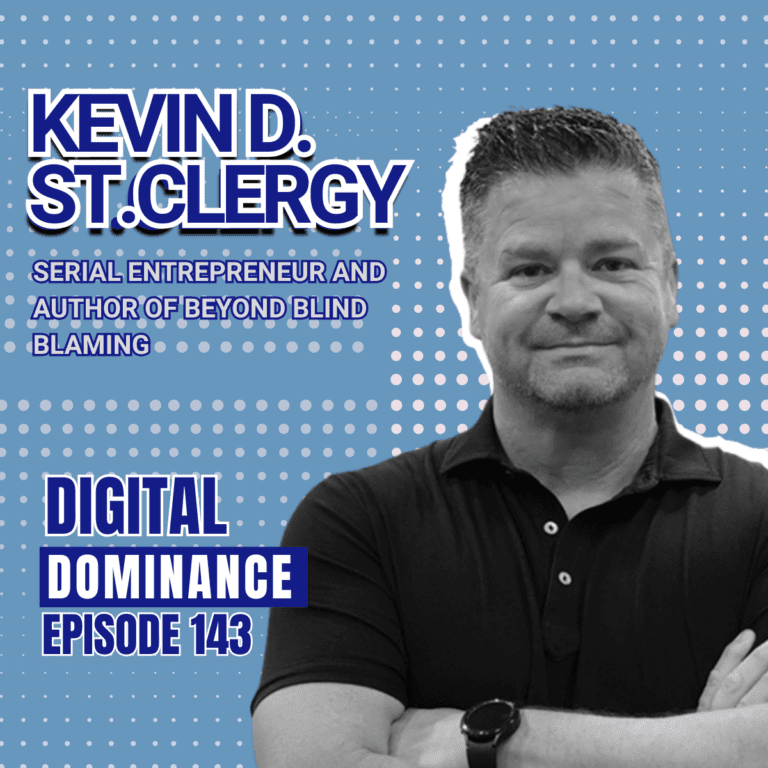
Kevin D. St.Clergy
Episode Notes
Summary
In this episode, Jeffro sits down with Kevin D. St.Clergy, serial entrepreneur and author of Beyond Blind Blaming, to discuss why many service businesses misdiagnose the real reason their growth slows. Kevin explains how business owners often blame marketing when the real issues lie in their systems, sales process, or internal operations.
Kevin introduces his RCD method—Reflect, Connect, Decide—to help leaders identify the true root of problems, along with his M3 framework: Mindset, Margins, and Momentum. From answering phone calls and improving reviews to raising prices and empowering teams to make decisions, Kevin shares practical strategies for uncovering bottlenecks and creating sustainable growth.
Takeaways
- Blind blaming causes business owners to solve the wrong problems
- Marketing often gets blamed when operations are the real issue
- Tracking the full customer pathway reveals where revenue is lost
- Raising prices can immediately improve margins and growth
- Sales improve when teams ask questions instead of pitching
- Empowering employees to make decisions increases momentum
- Personal mindset and health can directly impact business performance
Chapters
00:00 Why Businesses Blame Marketing for Slow Growth
01:00 Real Example of “Blind Blaming”
05:10 The RCD Framework: Reflect, Connect, Decide
10:40 Tracking the Customer Pathway
12:20 The Power of Reviews and Reputation
15:20 The M3 Framework: Mindset, Margins, Momentum
17:30 Why Raising Prices Works
22:00 The 1-3-1 Decision Method for Teams
26:00 Hidden Problems Business Owners Miss
30:10 Kevin’s Readiness Assessment and Final Advice
Links
Website: https://www.blindblaming.com/
Free High-Converting Website Checklist: FroBro.com/Checklist
Transcript
Jeffro (00:02.019)
How many times have you blamed your marketing for slow growth? The ads aren’t working, SEO takes too long, we need more leads. But for many service businesses, marketing isn’t the problem. The problem is what happens after the lead comes in. My guest today is Kevin St. Clergy, and he’s built his entire methodology around helping business owners stop what he calls blind blaming, the costly habit of solving the wrong problem.
Kevin is a serial entrepreneur with over 25 years of experience, two successful exits, and more than $50 million in combined sales across healthcare, marketing, and real estate. He’s also the author of the award-winning book Beyond Blind Blaming, which is endorsed by Jack Canfield and Russell Brunson. And he’s going to challenge some assumptions today, because if your phone is only being answered 50 % of the time and the person picking up has no script, there’s no amount of ad spend that’s going to fix your revenue problem. So over the next 25 minutes, Kevin’s going to walk us through his M3 framework.
and you how to diagnose exactly where your growth is actually stalling, not where you think it’s stalling. So Kevin, welcome to Digital Dominance.
Kevin D. St.Clergy (01:00.206)
Thanks, Jeffrey. Glad to be here. Looking forward to this.
Jeffro (01:02.402)
Me too. Yeah, I love these kind of conversations. And I think we should start with this idea of blind blaming, which is a great phrase. Can you give us a real example of a service business owner who came to you blaming their marketing and what the actual problem turned out to be?
Kevin D. St.Clergy (01:17.166)
Absolutely, yeah, because as we talked about before we started, I used to own a digital marketing agency. But we were in the medical field, but with their local service-based businesses, because they’re trying to get new patients in the door. But I had somebody call me one day and say, Kevin, is our website up? Like we just took it down. You know, I took it down, I hate you.
Jeffro (01:21.261)
You
Kevin D. St.Clergy (01:34.294)
No, we didn’t do anything like that. Your website’s up, it sounds like you just had a bad month, let’s dig in and see. So we’d go into their call tracking and listen to their calls. And I’m like, hmm. Because they said, I don’t think this marketing is working. I’m like, well gosh, we generated 22 calls, but let’s start listening to them. And the first call was like, yeah, we can help you, it could be as much as $7,900, but you probably won’t need that.
was like, okay, not the script that we developed for you, because we used to help people beyond just the digital marketing stuff that we did. It’s not the script that we practiced, but then we started listening to other calls, the 22 that we developed, which would have been about $75 per lead, I believe was the number, the person I’m thinking about.
Jeffro (02:12.15)
Mm-hmm.
Kevin D. St.Clergy (02:13.282)
They were only answering 50 % of the calls and they were ready to quit us as a marketing agency. I’m like, look, this isn’t a marketing problem. This is a staffing and a systems problem. It’s not even the person’s fault. Let’s go back and look at your onboarding. How are you training new employees before you put them up front to answer the phone? And the client said, what do you mean? And I’m like, okay, wrong answer.
Wrong answer. I guess you’re not training them at all. Well, yeah, we do. We give them a two hour training and then we let them go to work. Not enough.
Jeffro (02:44.181)
So, I mean, I hear that a lot, know, especially from people who’ve run their own agencies, that there’s this huge disconnect between the expectations of what the agency should be doing and what’s not working. And they’re kind of almost giving up control. Like, I’m not bothering to understand what’s supposed to be happening. It’s like, well, you do it, right? How common is this, though, you know, that people aren’t answering their phones, they’re not following what they’re given? Is it just…
Because we’re hearing the stories that don’t work that we make it feel like it’s more often or is it actually a pretty common thing?
Kevin D. St.Clergy (03:19.606)
It’s very common. I think we all do it. That’s why the book has been so popular. I think that’s why people like Jack Hanfield and some other high performance leaders that we’ve read the book love it because we all tend to blame the wrong thing. And there’s three fatal flaws of blind blaming. This should explain a little bit why it happens because the first thing I try to do is make people aware that it exists. And once people are aware and they see it, they can’t unsee it. And it’s helped them a lot. So fatal flaw number one is that blind blaming actually blocks
real solutions because you’re too busy solving the wrong problem. At the heart of this whole thing is it’s not that people are failing at solving their problems, they’re just solving the wrong problem perfectly. What we’ve got to do is help them identify it. So there’s this thing called cognitive biases that exists in human beings and these are just mental shortcuts that we all have. They can be very good because they give us structure and they make us, they help us make fast decisions but they can also be very bad. And the first one we talk about, this is fatal flaw number one.
is availability bias. That means the first thing that we think of is clearly the root cause of the problem that we’re suffering from. So when it comes to my business being down and things are slow, it’s clearly Jeff Rose fault or my fault.
it’s the marketing company, probably need to switch agencies or I need to build a new website or whatever. And then fatal flaw number two comes into play because that’s when we become a treasure hunter for data to back up our initial thought. It’s actually called confirmation bias. We go out and look for data to back up what we initially thought of and then we fall into fatal fault number three, which is we’re so busy solving the wrong problem and getting data to back it up that we can’t see what’s really going on.
Jeffro (04:54.579)
How do you get past that default in people? Is it just practice?
Kevin D. St.Clergy (05:00.216)
Well, we we teach a process and the book we outline it as the RCD method. So it’s simple, but simple doesn’t always mean easy. So RCD, if you want me to go into it, can quickly.
Jeffro (05:12.338)
Sure, just give us a brief one, we’ll come back to it too.
Kevin D. St.Clergy (05:13.996)
Yeah, so it’s reflect, connect and decide. So reflect means you simply have to ask yourself this question. Is there something else going on that I can’t see? And a lot of times there is. And a lot of times it’s not what you think. Like we’ve had business owners approach us saying like my business is down. I think it’s my marketing. Maybe I should replace my agency. And then we start taking them through reflect, which goes through five different areas of their life and their business. I’ve had people find out they have low testosterone. It has nothing to do with what they originally thought. Or they have sleep apnea. I just had one of those recently.
I was like, look, you haven’t been to the doctor, you’re falling asleep at three o’clock in the afternoon taking naps, you know, instead of running your business, there might be something else on health going on. Sometimes people lose their ability to have a growth mindset versus a fixed mindset and some other things that we go into that we want time. But once they think they know what it is, most of the time, that’s not really the problem. So a C means connect and you have to connect with somebody outside of your sphere of influence.
Because when you’re stuck in this blame loop that we outline in the book and the people around you are in that same blame loop, it’s almost physiologically impossible for you to see a different way of doing something. And it’s been proven in books like the structure of scientific revolution where this guy studied researchers and when they had results of their research that came in where they thought it was going to be or the results were what they thought they going to be, everything was fine. But when it was different, it was almost like the data didn’t exist. So guess what they did? They’d run that thing again. And that’s what we do in business for ourselves.
So then finally, once you connect means you connect with an outside source like a coach, an expert, or a mastermind group. And I love all three. So finding somebody who can see things from a different angle or a different way, just like when I was 10 years old, I was a phenomenal baseball player at a batting average of 550. I was killing it. My dad started working with me on my mindset. We had a swing coach prepare me for the next lead, which was going to prepare me for high school ball. And when I stood up to bat the next year, something was different because I started swinging and missing.
And I basically went from hero to zero, a 550 batting average, which is really great for those of you don’t know anything about baseball, to zero, which is really bad. And you can probably guess what I heard from the stands. Come on, kid, keep your head in the game. Play to win this time. And then my dad would lecture me on the way home of all the things that I did wrong and how my attitude went to complete you-know-what. And then two weeks after I quit baseball, we found out what the real problem was. I went to the eye doctor to fluke eye exam, and we figured out that I just couldn’t see.
Kevin D. St.Clergy (07:31.181)
couldn’t see the ball and the real problem was this the adults in my life never stopped blaming me for something that was completely out of my control that’s how he came up with the term blind blaming by the way so it took somebody from outside to see that this wasn’t a baseball problem was a swing problem wasn’t an attitude problem I couldn’t see
Jeffro (07:36.325)
Yeah.
Kevin D. St.Clergy (07:48.365)
And so once you’ve had that outside person in the connect phase tell you what to do, the next day just decide. You’ve got to make, we call them MFD, make an effing decision. It’s become a thing. I thought it was going to be bad because I use the F word in my book, but it’s actually become like that’s people’s biggest takeaway. They’re like, God, I just need to get out of my own way and make a decision to move forward. So that’s it, R-C-D.
Jeffro (08:11.096)
I like that and thank you for sharing that story. think that’s a perfect analogy too for running a business. And I was thinking about how this changes as businesses grow because if you’re like a small one or two person company, you might not even have the tracking in place to know, we had 22 calls. I thought we only had 11 because that’s how many we talked to, right? And so you have to start putting in those systems to track stuff and you actually have data to look at.
and see what the problem is because you can’t assess it until it’s there. are there inflection points that you’ve seen with, you know, revenue levels where the previous growth ceiling, the marketing was the issue, but now we’re able to track it better. Are we still assuming it’s marketing because it was last time?
Kevin D. St.Clergy (08:54.616)
Great point or great question. So here’s what I like to say at every new level, there’s a new devil. You just have to expect it. It’s going to happen. So every time you hit this one new level, there’s something else that’s going to happen. You know, hopefully it’s not as bad as some recent clients that we had that had such a big level that they couldn’t afford their tax bill because they weren’t running their finances well. But basically, lost my train of thought. might have to edit this one out. Tell me the question one more time. Cause I was going to write it down.
Jeffro (09:23.466)
No worries. I was just asking about the different scale sizes and revenue points where, you know, it might be the marketing is problem, might be operations, but yeah.
Kevin D. St.Clergy (09:24.192)
One time.
Kevin D. St.Clergy (09:32.707)
Yeah, thank you. So the biggest challenge that people have when they’re blind blaming is they don’t have enough information on their business. So I’d say about 80 % of the time the 80-20 rule, it’s lack of information that allows you to know what the next step should be. And a lot of people don’t have that data. Sometimes it’s…
They’re not looking at their P &Ls. They’re not looking at how many leads came in for the month. They’re not looking at how they’re converting those things. And that’s when they start blind blaming because they don’t have enough information. And a lot of times their sales, their profits, their P &Ls, those are lagging indicators on how the business is really doing. Sometimes they need to look at things like how many reviews am I getting on Google? Which, Jefferyl, you and I both know if a local service business does one thing and get more reviews than their local competition, their business should be increasing 15 to 30 grand a month depending on the services they provide.
Jeffro (10:17.767)
reviews.
Kevin D. St.Clergy (10:22.817)
seen it every I’ve seen it over and over again. But a lot of times they’re like, it’s my website. it’s my marketing agency. it’s my front desk. it’s somebody else couldn’t be me. And then it’s that one thing they didn’t think of, but most of the time lack of information. And so yeah, call tracking I think is extremely important. I call it the customer pathway. Every time somebody is struggling with a local service based business that I started working with, I started looking at their customer pathway. Marketing’s job is to make the phone ring. And this is what used to crack me up. You’ll see some digital or
about my digital marketing agency, my book, if you ever pick it up, because they would assume just because their business is down, it’s the marketing company. But when I go listen, it’s the front desk. So marketing’s job is to make the phone ring, because when I said to that one client, you got 22 calls last month, they’re like, yeah, Kevin, but I only scheduled two. was like, well, that’s not my job. That’s your job. Take some responsibility. And to take responsibility, you got to stop blaming and complaining. So once you convert the call to appointment, then your sales team has to convert that appointment or…
Jeffro (10:55.84)
You
Kevin D. St.Clergy (11:21.767)
Meeting into a sale and then after the sale you’ve got to convert that into a satisfied customer That gives you reviews and referrals So every time I take apart that customer pathway, we always find one or two things that can be done differently But what I’m finding the most is people just aren’t measuring that patient pathway and how people are doing is your marketing generating leads are the leads being converted are the Appointments being converted into sales and other sales being converted into reviews and referrals
And if not, there’s a breakdown and we can usually find out pretty quickly where the problem is, just like a local electrician company who’s a member of the family. My girlfriend’s daughter married a man who’s with a, an electric and HVAC company and they’ve been really struggling this last year and he switched marketing companies three times. He’s let go of his whole team, completely rehired people and finally came to me for help. And the first thing I did was just Google him. And then his average rating in two of his locations is 1.6.
Jeffro (12:15.176)
You
Kevin D. St.Clergy (12:19.662)
and the main location is 3.4. And I’m like, dude, this is your problem. Yeah. I mean, let me add, cause I got on the phone. was like, just do this, Google it. And then I’m going to ask you a question. Would you call this company first? He goes, hell no. I wouldn’t call this company first. Thank you. And he went to work and that’s what they’re working on now. And I think it’s going to create a great bit of success for him once he gets cleaned up. Cause what we found is they were afraid to ask for reviews.
Jeffro (12:24.894)
Nobody’s gonna hire you.
Kevin D. St.Clergy (12:48.3)
I’m like, well, if you don’t have a process in place for asking and you’re afraid, mean, what’s your biggest fear? He’s like, well, then I’ll get a bad review. like, you already have bad reviews. And if you’re afraid to ask and you keep getting bad reviews from the people that are happy, like me with the services you provided to me personally, you got another problem we have to deal with. But for the most part, you guys seem to do a good job. Just ask your happy clients to go and make or give you a review and focus on Google for the next six months. That’s it.
Jeffro (12:49.117)
Interesting.
Jeffro (13:13.947)
Yeah, and one thing I learned at one point is for people that are really scared about that, you can ask in an email or something like, hey, can you respond and let me know how things went for you, right? And if they reply and say, it was great, then you say, really appreciate that. Would you mind posting that as a review? If they say it was terrible, like, I’m so sorry to hear that. How can I make it right for you? Don’t ask that person for the view. Just fix it. Right. And so you kind of
get happier customers on both ends and it helps your business get more positive views because you’re almost just filtering them and that’s in that case.
Kevin D. St.Clergy (13:50.019)
Yeah, I love it. And I would just make one suggestion, one tweak in what you just said. When you email them, there are these things called forced answer questions that we learned about. And so you want to ask them, what did you like best about what we did for you? What did you like best?
Jeffro (14:00.028)
Okay.
Kevin D. St.Clergy (14:06.798)
Because you’re forcing them, there’s another cognitive bias called negativity bias and it’s really rampant in the world right now if you couldn’t tell. It’s just our human nature to go negative. So what’d think? How you feeling? That’s why on every new client call we instructed our team and our coaches to start saying what’s going well. And when you start asking this to people, watch what they do because they’re gonna be, wait a minute, what’s going well? I was perfectly willing to complain about all the crappy things going on in my life right now.
But I think those forced answer questions like that will make a big difference. Or one of my all time favorites was when you first start talking to a newer client, no matter what business you’re in, this works, it’s called Pre-Sway-tion, which is a great book, but I’ll save you the whole read. What great things have you heard about Jeffro? Or my company, or whatever your agency is, what great things have you heard about my local service company?
And it starts the meeting off. And I had somebody on my podcast that was a clinical psychologist. goes, I don’t think you know what you’re doing when you do that. I was like, well, tell me. And she’s like, you’re activating a part of the brain that’s going to set the stage for the entire meeting. You’ve pre-sold them on what you’re doing. Cause if you can get them talking positively about you before you even go into what you do and how you can help them in the cost of it, you got them.
Jeffro (15:19.386)
So let’s dive a little more into your M3 framework because I mean we’ve touched a little bit on mindset which is the first then we’ve got margins and momentum. Let’s actually talk about margins because we’ve already talked a little bit about the first part. So a lot of service business owners can’t tell their actual profit per job just because services are often customized and things change. How does having that margin clarity drive growth and how can you actually get to a point where you have greater clarity on your margins?
Kevin D. St.Clergy (15:33.347)
Yeah.
Kevin D. St.Clergy (15:49.36)
I think it’s first knowing your numbers. Like I said before, lack of information is the biggest challenge service based businesses most of time have. And so if you don’t know what your breakeven point is, it’s pretty hard for you to structure an offer or a deal or however you, whatever you call it or a proposal.
So gotta figure out what are my expenses for the entire month, including what you pay yourself. I see a lot of owners, owner-operators, they’re leaving out that number when they’re trying to figure out their break-even amount. So once you have that, then you can figure out how much you should charge by the hour. Because you can look at your cost per hour, then you can figure out how much you wanna make, and then you can either double or triple that, whatever you want your margins to be or whatever you feel comfortable doing.
But if I could give anybody advice listening right now, and it’s one of the first things that we do on the margins, there’s one quick way to grow your business immediately today. If you take one thing away from this call today, it would be this. Just raise your prices.
It’s one of the first things that we do to increase your margins. So have the money to do the things you want. But they gotta know what their break-even point is and they gotta know what their cost to operate by the hour is. And it doesn’t matter how big or small you are. We’ve worked with businesses that are doing three or $400,000 a year and we’ve got several clients who are at that seven to $10 million a year. It’s always the same advice to get better margins. You simply raise your prices.
but you also have to look at your sales process. That’s part of creating those margins. Do we have a good sales process in place? Because you can generate leads, get the appointment, and then your salespeople are blowing it because they’re not following a process or they’re just going into pitch mode instead of asking questions. So the sales process should have a lot of questions that you ask to get them to talk. And the less you talk, the more you make.
Jeffro (17:30.389)
Yeah, and I think there’s a lot of people are scared to raise their prices. I can say for myself, when I’ve raised my prices, it’s been mostly positive experience and most people stay. You might have a couple of people ask questions like, why is this needed again? And then the ones that leave, they tend to be the ones you don’t mind losing anyways.
Kevin D. St.Clergy (17:53.871)
That’s right. Yeah, I know they don’t value your services or they’re looking at there. It’s very transactional instead of transformational. They don’t have the relationship. So yeah, totally agree. We did it every year. We cause I mean, let’s face it guys are our costs are going up every year, whether we like it or not. The last several years, everything’s gone up. So you got to raise your prices. I see people that are so hesitant to change their prices. We just had a client that did it recently. had our coaching call yesterday for the month and she, I got her to raise her prices at the end of January and she
just happened to have the best February that she’s ever had. Now she did some marketing I told her to do too, so throw that in there. But she raised her prices, she was scared to death to raise her prices and I said, just keep it posted on the first five people that you present this new pricing to, because I said, who do you think is freaking out the most on your new pricing? And she’s like, well clearly me. I’m like, exactly.
Your clients don’t know just present the new pricing do it with confidence and we did work with her on an offer stack. So I’m real big on creating offers that are so stupid that people have to be stupid to say no. You have to figure out what that is on your end but there’s other ways to increase value without adding costs.
Jeffro (19:03.797)
Yeah, and one other thing I’d say is if you wait five years to raise your prices and now you’re like, oh, I got to raise it by 20%, like that’s a bigger hit, right? When customers are like, wait, suddenly my monthly budget just got shifted. Whereas if you do it every year, okay, a couple percent each year, match inflation, whatever, however you do it, it’s a little bit easier to have that bite size chunk. And it works better for everybody in that way.
Kevin D. St.Clergy (19:28.375)
I agree. And if you’re having trouble getting people to say, yes, as much as we don’t like it, another recent client who had an agency that I worked with when I said, listen, now that we’ve got your business model and offer squared away to increase your margins, let’s work on your sales process. And she says this publicly, so I can say it. She started crying. She’s like, Kevin, God, you know, not another sales process. Come on. And then finally, once we got these 10 questions in place and she saw how much of a difference it was making, then she started shifting and
goes back to the mindset too and how they all work together. She started interviewing potential new clients instead of pitching. And that way she’s only picking the clients that she knew she could get results for.
Jeffro (20:11.261)
That’s powerful. So let’s talk about that momentum then, that third How do you create momentum that’s going to compound instead of just having these random bursts of activity?
Kevin D. St.Clergy (20:19.427)
Yeah, well, think the first is learning how to use AI and I know some people don’t want to hear that but I also know that a lot of your listeners are resistant to AI and I’m telling you I was too.
until about a year and a half ago. And we have built so many systems internally. I do not recommend you use AI for marketing. And I tell that to all my clients. This is not just a pitch for you, Jeff Rowe, or the things that other marketing companies do. It’s just not there. And I mean, I had a client and she’s like, well, gosh, well, based on what you told me, I can use AI to build my website and do the SEO and things like that. I was like, look, the only people that are saying you can do that are the people who are selling that AI marketing software.
Don’t throw the baby out with the bathwater. If you’re paying two grand a month for your marketing to a digital agency and you’re doing 50, $60,000 a month, and this particular client had the best year they’ve ever had last year. And she’s like, wow, I can save $2,000 a month if I do this with AI. I’m like, no, you can’t. You’re going to lose $60,000 a month and you just had the best year of your career. Are you nuts? Don’t do it. I’m pretty direct in my coaching if you couldn’t tell, but, she’s a good friend, but she was like, God, you’re right. I could have made
Jeffro (21:13.488)
No.
Yes.
Jeffro (21:23.74)
I love it.
Kevin D. St.Clergy (21:27.259)
of mistake. I was like, look, I know those AI companies are selling you on some things that you could do to replace this or that, but look at what the results you’re getting. This goes back to lack of information, not looking at the right things that you need to scale and create that momentum. So the numbers come into play for that momentum as you asked in the beginning of this question.
Jeffro (21:46.757)
Yeah, and AI right now, you still need a human driving it. So if you are not an experienced marketer driving the AI, you are not going to get the results that an experienced marketer using AI would get.
Kevin D. St.Clergy (21:50.254)
Agreed.
Kevin D. St.Clergy (21:58.17)
Yeah, but there are some things you can do to make yourself more efficient and I do think you should teach your team and I’ll give everybody a great example. So how many of you listening, Jeffery, you included, have ever heard this from a team member? And don’t know how big your team is, we didn’t get into that today, but I had 23 people when I sold and there was a time years ago where people would come up and say this, hey, Jeffery, you got a minute? Sure, I just sit here and wait for you to ask me questions. I’m absolutely doing nothing today.
Jeffro (22:01.55)
yeah.
Kevin D. St.Clergy (22:26.027)
No, I don’t have a minute. First, you to get good at saying no. But if that keeps happening to you on a daily basis, it’s crippling your efficiencies, not just with you, but with your employees too, because if they’re doing it to you, they’re probably doing it somebody else. And so what you have to teach them, I got this from Dan Martell as my coach last year. He wrote a book called Buy Back Your Time. Incredible book. Everybody should read that. But he teaches us one three one method. Teach your team how to think. And that’s the hard part. And you have to kind of start playing dumb too. That’s the other thing I learned from him is when people come to you have to say, I don’t know, what do you think?
Jeffro (22:40.97)
yeah, great book.
Kevin D. St.Clergy (22:55.403)
One, three, one. And then they’re like, right, and they go back and do it. So one means they come to you, they think about one problem, they don’t come to you, they just think about the one problem they’ve got, one, at a time. Then they have to come up with three possible solutions and they have to pick the one that they think is best. One, three, one. But where I saw people getting stuck when I was teaching this and sharing with them, which I had full permission from Dan himself to do so.
They were getting stuck and it wasn’t working. And so we had to take it a step further. So what we do is we say one, three, one, but sometimes just people don’t know how to think. A lot of business owners do because that’s how we’ve gotten where we are. But sometimes we bring on employees and we’ve started including this in their onboarding training now to make sure they know exactly what we expect to get the three possible solutions. They need to start using AI and they need to start using Google. I know it sounds dumb and basic, and I’ve heard people say, Kevin, that’s common sense. No, it’s not. It’s not how people think.
Jeffro (23:45.741)
out.
Kevin D. St.Clergy (23:46.456)
It’s how you think as an owner, it’s not how they think as an employee. So we have to transfer that knowledge to them. And once we implemented that one tweak, then one three one started working often. And again, to create that momentum, that’s one strategy you can do to take, give you more time to sell or grow your business or spend time on marketing or get your metrics in order.
Jeffro (24:09.154)
Yeah, and I think that can help give those employees the confidence to move forward because just like you said, the mindset’s different to a business owner and sometimes employees are wanting to do things the right way, right? And so they want to run it by you. They want you to tell them what the answer is before they go do it. And so that’s why it takes so long. And you have to start pushing back and be like, you have all the information. What do you think? And then they’re like, OK, well, I guess it’s this. Yes, go do that. Like, you don’t need to ask me that.
All right, so those three obviously work together, margins, mindset, and momentum. And I love how you’ve kind of shown that, right, through some of the examples we’ve talked about. There’s a lot more things I’d love to talk about, but we are coming up on our time, so I wanna just maybe touch on a couple final things before we wrap up. Are there any top wrong problems that you see business owners trying to solve when the real issue is something else entirely?
Kevin D. St.Clergy (25:04.848)
great question. Yes, absolutely. So we have this thing called the obstacle deep nexus analysis. It’s ODNA is what we came up with. There’s five different areas that we look at. I’ll give you a few, because I want your listeners to go read the book. But the first is health.
And I’m seeing this a lot in service-based businesses for whatever reason. It’s not our core target, but friends of friends of friends we get introduced. But we still have a company in that audiology and hearing aid market. So I’m still actively involved. That’s where we were. That’s where I got my start, believe it or not, was audiology and hearing aids, which is a very, very small medical niche. But we still have mastermind companies where people join, and we kind of get everybody together to grow their business.
Jeffro (25:40.63)
Nice.
Kevin D. St.Clergy (25:51.151)
And Jeffery, I’m sorry, I don’t normally forget stuff again, but I am doing it today twice. So when I do like five or six of these a week, tell me again what the question was so I can answer it.
Jeffro (25:56.085)
No worries.
Jeffro (25:59.963)
what are like maybe the top three wrong problems that people are trying to solve?
Kevin D. St.Clergy (26:03.001)
Thank you. Hopefully I have a good editor. If not, I do, but that’s fine. So what I see, the top three problems, the wrong problems that they fix, going back to that ODNA analysis, the first one is health.
Jeffro (26:07.146)
Yeah, we’ll take care of it.
Kevin D. St.Clergy (26:18.883)
I see a lot of people ignoring their health. I did it for years. I lost 40 pounds last year just by making some simple switches. A good coach of mine was like, Kevin, this is at the core of your problems now because we sell a company, you start over, it’s very different and it’s harder than you think. But we look at other things like, I mentioned a couple today, like we, think a lot of people don’t get their hormones tested as they get older. I’m 53 years old, so things started happening. I had a problem with testosterone. Once we got that fixed, I still kind of felt draggy and everything else.
Jeffro (26:22.268)
Mm-hmm. Good for you. Nice.
Kevin D. St.Clergy (26:48.817)
come to find out I had sleep apnea. Now once I lost the weight, that’s gotten better, so you know, one thing leads to another.
But we’ve also seen people in our women, so women business owners have come to me after reading the book and going to actually get their hormones tested, because a lot of doctors don’t lead with that in your physicals or anything else. And I’ve seen this happen in the younger people, my girlfriend included, was really dragging, went and got her hormones tested, low testosterone, believe it or not. They help a lot more women with that than men. Sometimes it has to do with relationships.
How you do anything is how you do everything. And I’ve found a lot of people who are struggling at home and they’re bringing it into work. And those relationships they have at home can affect the relationships they have at work because when you walk in work pissed off, well, that’s gonna affect your ability to lead and get your people to do what you want them to do.
Other things are a growth versus a fixed mindset. People with a fixed mindset can’t stand getting feedback. They take it as a personal attack or they don’t think they need it. And people with a growth mindset figure out, mm, intelligence is not fixed. It’s something I can always learn. Maybe I can’t do that. Instead of saying, I can’t do that, I can’t do that yet.
A growth versus a fixed mindset is another one that we look at. And we also wanna make sure that they have the resources that people need to be successful as well. Because sometimes they’re not reading and learning like they should. Like I believe everybody should read every single day. And I know you don’t like to read, some of you are listening to this. I’m sorry, you have to learn how to read. And just start with something small. 10 pages a day.
Jeffro (28:15.504)
you
Kevin D. St.Clergy (28:18.9)
is what I recommend. And if you can read 10 pages a day, all of a sudden you’re going to start to get things. Because what happens is business owners, we’re all busy. And just sitting down to read 10 pages for some of you is a challenge. But I promise you, because we’ve implemented this with all of the coaching clients that we work with, or even friends, are like, how do I get to where you are? I’m like, just read. Read 10 pages a day.
Or when people stop me when I’m out in the Lambo having some fun on a Friday or Saturday afternoon when I like to drive around. And I love it when kids come up to me and say, what do do for a living? Or what do you do to get this car? It’s like, I read a book. They’re like, you read a book? Well, it’s really funny. Some of the kids I meet sometimes, this is hilarious. This happened a few weeks ago. This kid comes up to me, great kid, very motivated. He’s like, man, I want to be where you’re at. I want this car. What can I do to get this? And I said, read a book. And I said, here’s the one I would start with, think and go rich.
And he goes, swear to God, is it on YouTube?
Yes, probably, but just read the book. In fact, I had I was carrying some of my cars like look. Here’s the book read ten pages Here’s my card call me when you’re done. He was in high school. So he’s old enough and he’s with his dad His dad was like I’ve been telling him this for a while. So it’s just funny You got a shift start stop what I’m not gonna tell you to stop watching videos, but you got to start reading So best way to learn
Jeffro (29:33.978)
Yeah, or books on tape, not tape anymore, but audio books are another way to like a stepping stone, know, so because you’re getting the same information if you learn differently that that’s fine too. But same idea, right. And sometimes, yeah, I’ve listened to this book by T. Harv Eker, Seekers of the Millionaire Mind, like I’ve got the audiobook of that. I’ve listened to my car like over the years, probably five or six times. And it’s just great to reinforce it that way. So all right, we’re coming up.
Kevin D. St.Clergy (29:40.545)
Absolutely.
Kevin D. St.Clergy (29:46.136)
Well, that’s how I started.
Kevin D. St.Clergy (30:01.71)
That’s funny because I did the same thing. we, I used to drive 5,000 miles a month and I was like, I don’t have time to read, but I have this an audio tapes. If I liked the audio tape, I get the book. That’s how I my library. Sorry to interrupt.
Jeffro (30:04.237)
yeah?
Jeffro (30:12.931)
Yeah, no, no worries. I fully agree. But I think, Kevin, this conversation is going to make a lot of business owners uncomfortable, which might be exactly what they need. I love how direct you were with this. I think that clarity helps, right? There’s we have information overload right now, especially with AI, like all the information is at our fingertips, but we need someone to guide us through that. And I agree. You know, most of us are really good at blaming marketing, the economy or competition when the real problems are right under our noses. So
For those of you listening who want to go deeper and figure out where you’re actually blind in your own business, Kevin has a readiness assessment. Kevin, where can they sign up for that? I think you mentioned blindblaming.com slash DD. We’d set up for something for our digital dominance listeners.
Kevin D. St.Clergy (30:58.478)
I did, yes. So we’ve got this readiness assessment that we call, because a lot of business owners want to scale and grow their business. But a lot of times they start doing things before some other things are in place. So we created an assessment and a 90 minute call to go along with it with me. It’s normally 997, but you’re going to get a 15 % discount because you’re a Jeffer listener.
And so yes, it’s blind blaming.com forward slash DD. I promise you, will love this assessment. It’s going to give you some clarity. But here’s the thing. I always tell people, look, if you buy it, you have the 90 minute call with me and you actually show up for the call and you don’t see any value for it. I will give you a hundred percent of your money back. I don’t need to keep people’s money. don’t see, they see the value. I haven’t had to a refund check yet, but there’s always a first time for everything. But if you take the assessment, take the time to get on the phone with you for 90 minutes, I will help you put together a 90 day plan to
start your scaling and be more successful. And we think it’s pretty affordable. I can’t do 997 times 15 % discount on my head. I guess I can try 997 times 415. Should have been better prepared. It’s about $150 off, but I think it’ll help you guys. So again, I’ll give you money back if you don’t like it. It’s blindblaming.com forward slash B B excuse me, DD. Geez.
Jeffro (31:55.587)
Ha ha.
Jeffro (32:10.241)
That’s awesome. Thank you, Kevin. Listeners, your homework is, you know, this week, stop blaming your marketing for five minutes. Honestly, audit what happens after Elite comes in. Are you answering every call? Do you have a script? Are you following up? Are you tracking conversion rates? All these things we talked about, because you might be one process fix away from doubling your revenue with the traffic you already have, which would be awesome. So that’s it for today. Make sure to subscribe to Digital Dominance. Leave us a review. Go do the readiness assessment and we’ll see you next time. Thanks, Kevin.
Kevin D. St.Clergy (32:40.28)
Thanks for having me.
© 2016 – 2026 FroBro Web Technologies
27472 Portola Parkway #205-241, Foothill Ranch, CA 92610