
Podcast Episode
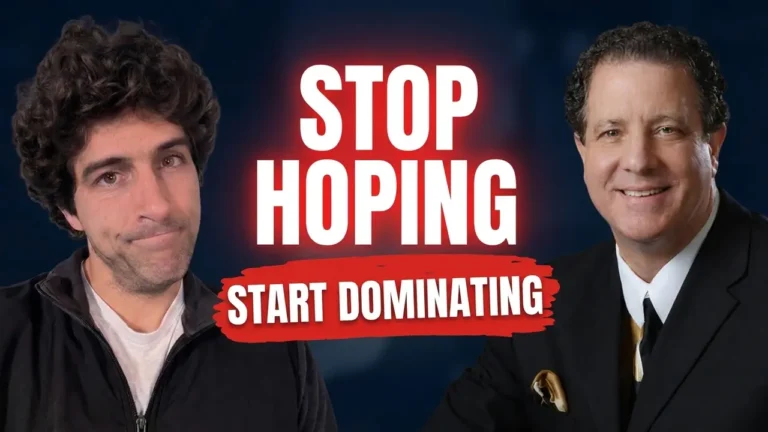
Stop Hoping, Start Dominating: Michael Barbarita on Killing 'I Hope So' Marketing
Michael Barbarita
Episode Notes
Summary
In this episode, Michael Barbarita, founder of Next Step CFO and co-author of Powerful Business Strategies, explains why most service businesses sound exactly like their competitors and how to fix it. He breaks down the position of market dominance, his captivate-fascinate-educate-close conversion formula, the five components of a compelling offer, and how a ski guarantee helped grow Ski Town USA from $2.5 million to $8 million in under five years.
Takeaways
- Why “I hope so” marketing (best quality, family owned, lowest price) blends you in with every competitor
- How a risk reversal like Ski Town USA’s ski guarantee can drive sales instead of returns
- The conversion formula: captivate with the problem, fascinate with the solution, educate, then close
- The five components of a compelling offer: scarcity and urgency, risk reversal, added value, packaging and bundling, and indifference to the outcome
- Why your message matters more than the platform you post it on
- How to sell the transformation instead of the transaction so you stop competing on price
Chapters
00:00 Introduction to Michael Barbarita
01:04 How running his own companies shaped his marketing
02:31 Ski Town USA and the ski guarantee
05:04 Packaging and bundling for perceived value
06:13 Applying risk reversal and bundling to service businesses
08:26 Getting into the mind of the prospect
09:46 The conversion formula: captivate, fascinate, educate, close
12:12 The five components of a compelling offer
13:30 Adding value: the free convection oven
14:50 Being indifferent to the outcome
16:03 Selling the transformation, not the transaction
17:07 Testing your position of market dominance
18:36 Message over media: does the platform matter?
19:28 Escaping “I hope so” marketing on your website
21:21 How many positions of market dominance you need
22:43 The mindset shift away from competing on price
24:47 Getting unstuck: talk it through or ask ChatGPT
26:12 Where to find Michael and his free business assessment
Links
Take Michael’s free 3-minute business assessment (Find Hidden Revenue): https://site.path2profit.ai/assessment/untitled-1776116658
Visit Next Step CFO and get Michael’s book, Powerful Business Strategies: https://www.nextstepcfo.net/
Find Michael on LinkedIn: https://www.linkedin.com/in/michaelbarbarita/
Follow Next Step CFO on Instagram: https://www.instagram.com/nextstepcfo/
Free High-Converting Website Checklist: FroBro.com/Checklist
Transcript
Jeffro Fulkerson: 0:18
What if the reason your ads, website, and offers aren’t converting isn’t the platform? It’s that your messaging sounds exactly like everyone else’s. My guest today is Michael Barbarita, who has spent 30 plus years owning and operating retail, manufacturing, and service companies, including growing Ski Town USA from 2.5 million to 8 million in under five years. He’s the founder of Next Step CFO, co-author of Powerful Business Strategies, and he teaches a framework he calls position of market dominance, messaging that gets into the prospect’s mind and makes price irrelevant. So in this episode, Michael’s gonna help us break down captivate and fascinate why I hope so marketing is killing local service businesses and how owners can rewrite their message so they stop competing on price. So Michael, welcome to Digital Dominance.
Michael Barbarita: 1:00
Thank you for having me, Jeffro. Great to great to be here.
Jeffro Fulkerson: 1:04
Yeah, and I’m excited to chat with you because you’ve done a lot of things. You’ve owned various types of companies, retail manufacturing, service companies, and you’ve sat in the CFO seat for your own businesses, right? So how how did that operator experience shape the way you think about your marketing and your messaging today?
Michael Barbarita: 1:14
Right. Well, one thing that I learned in my journey is that you just can’t keep doing what your competition is doing. ninety-five percent of s small businesses their strategies are identical to their competitors and they don’t work. And I’ve I found that out the hard way. and and actually my my journey is kind of in reverse. I had success, success, failure. So I said a failure, success, success. so I took stupid pills after the two successes and it it cost me dearly and that’s w you know what I learned and and and that’s what I have worked with clients regarding. You know, not not doing the same thing as your competition.
Jeffro Fulkerson: 2:06
That makes sense. And and it’s interesting you say that that you know you took stupid pills or anything. I don’t think I think you’re being too harsh on yourself. I think the failures have to happen one way or the other to learn the lessons. And so you are fortunate enough to get some successes first. I think a lot of people have to stumble through the failures enough to get hit over the head hard enough to actually learn the lesson before they can have the success. So well, good for you.
Michael Barbarita: 2:24
That’s right. That’s right. I w I went in rever that’s right. I went in reverse. I believe. Yeah.
Jeffro Fulkerson: 2:31
All right. So I want to hear about Ski Town USA, because you know, obviously growing from two and a half million to eight million in under five years, that’s that’s no small feat. So what was the messaging or offer shift that kind of helped you unlock that kind of growth? And and is there something our listeners can can learn from that?
Michael Barbarita: 2:34
Okay. Right. Well, it it’s actually something called a risk reversal. And let me explain. So the problem the customer had in the ski industry, and I always go back to what the what what the what is the problem that the customer has with a particular industry? Well, the c the problem the customer had with the ski industry is they really ni never knew if the ski they were being sold was the right ski for them until they got it up on the mountain and tried it out. You know, they had some hot flat hot shot ski salesperson flex the ski in their face. you know, a and and saying it was the right ski for them, but they really didn’t know until they got it up in the mountain and tried it out. So what we did is we implemented what was called a ski guarantee. Ski the ski three times, you don’t like it, bring it back for a brand new pair. Now of course, like driving an automobile out of a showroom, s skiing on a pair of skis depreciates it dramatically. so my employees thought I was out of my mind and they had envisions of thousands of pair of skis coming back and them having to do a lot of work extra work because of all the returns and us losing a ton of money. But I had just one thought process on it because I felt I really understood the skier, and that is all the skier really wanted was a great ski experience. There was nothing that ruined their day more, nothing than a bat, you know, schlepping up to the mountains, schlepping all the equipment to the to the slope. dealing with the family, all of that, plus the lift tickets, plus the cost. A bad day is just a bad ski day is just the icing on the cake of a disaster. So they all they really wanted was a great ski experience. we sold 8,000 pair of skis the first year we implemented it a 25% increase from the year before and only eight came back. Next year we sold 11,000 pair 14 came back. The customer isn’t out to To you know, to put one over on the business owner. Okay, they just want to solve their problem. And that solved their problem. They, you know, their problem was they didn’t really know if the ski they were being sold was the right ski for them. so we guaranteed it. We guaranteed it was the right ski for them. And then they bought more as a result. And that a risk reversal is one of the five components of a compelling offer. Okay, so And and that was the impetus, one of the things, the the critical components of our growth. The other component was packaging and bundling, which is another component of a compelling offer. Packaging and bundling products and services together is that gives a perception of value and it makes the offer more compelling. When I was in the ski business, everybody, everybody, and I mean everybody, packaged skis, bindings, and poles. But what we did is in addition to spending To packaging skis, bindings, and poles like everybody else. We also package clothing by taking the most popular ski graphics, going to the clothing department, and matching up a parka, pants, sweater, and hat to the ski graph to the most popular ski graphics, packaged them together and sold them as a package. And that what so once we sold those graphics, we brought them over to the clothing department. They saw the matching clothing and Voila. So that those those two components, risk reversal and packaging and bundling, are two of the five components of a compelling offer.
Jeffro Fulkerson: 6:13
And I’d say obviously that was in retail, but it still applies to a service company because risk reversal just means not that you could bring it back. I did the work, but if it doesn’t work, it means I’ll come out again for free to fix it or something like that. Right.
Michael Barbarita: 6:17
absolut. Absolutely. Right, absolutely. You know, what I w I’ve worked with c a lot of companies like in the trades, and you know, they have I I asked the I asked the business owner, how many times do you put a job on your schedule and blow it off or you’re like a late, late, you know, you’re late for it, like an hour late or two hours late, significantly late for it. And most of them say, not not many, you know, ne almost never. I say, well why don’t you guarantee it? Or the or the job is free, or the job is twenty percent off, or the job is fifty percent off, because it’s a problem the customer has with that industry. They don’t show up on time. So
Jeffro Fulkerson: 7:06
Especially with like a two hour arrival window. Like nobody likes blocking their day for that.
Michael Barbarita: 7:09
Right, right, right. Because some people are are staying home from work, losing money. You know, and so any type of risk reversal, solving the problem the customer has in that particular industry is is is just dynamite. Dynamite.
Jeffro Fulkerson: 7:26
Yeah, the same thing with bundling. I’m sure you could come up with services you can bundle together, like, hey, while I’m here, let me also check this appliance or whatever it happens to be.
Michael Barbarita: 7:34
Right. Absolutely. You gotta just get a little creative. but but you know, yeah, it I think bundling it bundling and packaging has this perception of value and even in the trades you could bundle pr services together. it makes it it just makes it more compelling. So there there’s no question there’s opportunity. As a as a matter of fact, we I I was working with a client who who recently he was an electrician and he bundled a generator I’m trying to remember with w something else. He bundled the generator with something else. I can’t remember what it was, but it was it was compelling. And he and and it and he was able to e that was an easy sale. An easy sale. So it it can be done in the trace for sure.
Jeffro Fulkerson: 8:26
Yeah. And you’ve said, you know, the key to successful marketing is getting into the mind of the prospect. Because once you understand that, then coming up with these things becomes a lot easier. You’re no longer guessing. You’re actually solving a specific problem that you’ve identified that those people have. So maybe you could walk us through this whole concept, you know, position of market dominance, how to captivate and fascinate, work together. Like what is what is all that?
Michael Barbarita: 8:44
Yeah, sure. Yeah. Yeah, so when I was doing research for my book, Powerful Business Strategies, which by the way is free on my website, when I was doing my research for that book, I I had to go all the way back to 1931, where I saw some some documentation that that that the key to successful marketing is getting into the mind of the prospect. Well, okay, great, but how do you do that? And the way you go about doing that is you identify you really Have it’s it’s because of two emotions. The problem the customer has and doesn’t want, the solution they want, they can’t find. And if you could if you can combine those two emotions, the problem and the solution, that’s how you get into the mind of a prospect. Because they have a certain problem, as I mentioned, with the industry. they have and and you know, we I work with clients to to determine that problem, but they have a certain problem in that industry. Something that they know that that’s a problem with that industry and they’re worried about it. And if you can alleviate their mind relative to that problem and solve that problem, you’re going to you’re going to convert. And you’re going to convert more than you you’ve you’ve you have, have been converting. And so we what I discovered was a formula, an actual formula. what I call the conversion formula, which converts prospects into your sales process or prospects in From your sales process into sales. And it’s four parts. It’s it’s quite simple, but here’s the point. It’s gotta be followed in the right order. Otherwise, it doesn’t work. So the first step in the formula is called captivate. That’s the problem the customer has and doesn’t want. you know, they’ve got this problem at with the industry, or maybe it’s not with the industry, but usually it is. They have this problem with the industry and they don’t know how to they they don’t He can’t find anybody to solve it. That’s the captivate. It’s the headline. It’s the first thing that you say or that you s or that someone sees when they come in contact with your brand. That problem they have, they don’t want. Step one, captivate. Step two is fascinate. That’s the solution to the problem that they can’t find. So the first step is captivate. The second step is fascinate. And if you recall, to get into the mind of the prospect, the key to successful marketing is getting into the mind of the prospect. And we get into the mind of the prospect by identifying the problem they have, they don’t want, the solution they want, they can’t find. So the first two components of the conversion formula is the position of market dominance. That’s your unique position where you’ve identified a problem and out here you’ve you’ve you’ve come up with a unique solution. The third step in the formula is we have to educate the customer. on why that solution is superior to the competition. So you got captivates the problem, fascinate the first and the first thing they see or that they or that you say when they come in contact with your brand. The subheadline, the second thing, is the solution. And then the educate can be in the form of a video, it can be in the form of a a a narrative. It could be some people some some put some people put their position of market dominance just to captivate and fascinate on incoming vo on incoming voicemail. So captivate, fascinate, educate. That’s the the third component, why your solution is superior. You can explain it now because you’ve captivated them with the problem and fascinated them with the solution. And then the fourth component is the close, which needs to be a compelling offer. And as I mentioned to you there are five components of a compelling offer. The first one is scarcity and urgency. Scarcity
Jeffro Fulkerson: 12:12
Mm-hmm.
Michael Barbarita: 12:39
I’ve only got ru in my schedule, I’ve only got room for four or three more appointments. you know, or I can only I only have two more appointments by the day you want this this project done. That’s that’s scarcity. Urgency. This price is only good until Friday. So it’s a time time, right? That’s t yes. And every every tradesperson and anybody who ever gives any kind of contract must and should have a
Jeffro Fulkerson: 12:58
Get out now.
Michael Barbarita: 13:08
Deadline. And it shouldn’t be 30 days. It should be like no more than seven. It should be a short and sweet deadline. They’re gonna get that price if they make a decision by that day. So that’s really important. So that’s scarcity and urgency. That’s the first component. Second is risk reversal. I explained that. Third is adding more value to pro to your product or service. So when I was in the frozen cookie dough business, the problem the customer had was they didn’t Want to waste valuable oven space baking cookies. They wanted to sell cookies, fresh baked cookies. They wanted to sell them as an add-on sale, but they didn’t want to waste valuable oven space baking them. So what we did to solve that problem is we gave them a free convection oven with every opening order. But here’s the problem I had. Now I solved their problem, but the problem I had was that my average opening order was $50. And the cost of a convection of it was 200. I was going in the hole 150. And the reason why I was willing to do that is twofold. Number one, I believed in my product. Because if you believe in your product, because if you believe in that product, you know they’re going to reorder. That’s number one. Number two, I understood the long term value of a customer was $5,000. So although I took a$150 hit on the first volley, and maybe even the second volley after the second volley, I’m still underwater.
Jeffro Fulkerson: 14:07
She’s
Michael Barbarita: 14:35
I solved their problem and I believed in my product and I understood the long-term value of a customer. So that’s adding more value. I added more value to cookie dough by giving away a free convection of it.
Jeffro Fulkerson: 14:49
Right.
Michael Barbarita: 14:50
The fourth the the fourth component of a compelling offer is packaging and bundling, as I explained in the Ski Town example. And then the fifth one is tough. We got to practice this one. It’s being indifferent to the outcome. When you’re when you’re indifferent to the outcome, truly indifferent, it comes across. And and you the the a prospect feels like they’re on the same side of the table as you are. You know, things like whether you work with me or someone else, this is go this you you’ll ha no matter who you work with, whether it’s me or someone else, you must understand these five components of a compelling offer, for example. Or you must understand, you know, if you’re if you’re an electrician, you must you must understand how this is gonna be a maj if we do A, B, and C, how it’s gonna increase your safety. So so once again, that’s that indifference. And that’s really important. Indifference is really and and you know a lot of people in the trades get too hung up on price. I’m talking about the owners and the and the the companies. And there’s you’ve got to sell the transformation. You cannot sell the transaction. If you’re selling the transaction, you’re selling on price. If you’re selling the transformation, you’re selling the outcome.
Jeffro Fulkerson: 16:03
Mm-hmm.
Michael Barbarita: 16:16
And and and that’s that’s really that’s really critical. And and I tell a lot of my clients, I say, you know what, when someone says they’ve got a lower bid or a lower you know offer, I I would I tell them, I would be suspect. I would be suspect. If I lowered my price, you should be suspect. And so yeah, so I think that that that lots of times, every time I deal with a client that’s so focused on the price. It’s unbelievable. And you know it what’s interesting, if they get ghosted, you know, if they give somebody a proposal and they don’t hear back from them, they think it’s because of the price. Not necessarily.
Jeffro Fulkerson: 16:59
Yeah, there’s yeah, there’s a lot of stuff. And I mean that was a lot right there. I want to circle back to one thing real quick. You talked about why you’re willing to go in the hole in that first transaction. and you said number one, because I believe in the product, but number two, because I track, I know the lifetime value of a customer. So even if you you don’t have to just believe in the product, because a lot of owners do that, but you had the proof that the product will
Michael Barbarita: 17:04
Yeah, there was. Yeah. Yeah.
Jeffro Fulkerson: 17:25
get renewed and the customers will stick around. And so on average, I know I’m going to make money. So it’s hard because a lot of people sometimes when they’re trying to do that position of market dominance, they might pick a problem that isn’t actually a differentiator. They might really believe in their product and they’re willing to do something like that. But then that’s a rough way to find out that you picked the wrong problem if you don’t have the data to back up that hey, maybe this is, you know, a good bet to be making.
Michael Barbarita: 17:50
Yeah, you know you don’t necessarily hit the right problem on the first volley. Necessarily. All right. That’s right. you know, it the the the the position of market dominance requires testing. It just does. because you don’t hit it necessarily. Some people do, but you don’t necessarily hit it on the first shot. you’ve got to keep tweaking. And but but but if you identify that problem, you’ve got
Jeffro Fulkerson: 18:13
Right. And Yeah. And and it’s worth trying, of course, because otherwise you’ll never get to the end result or the strongest one. a lot of people get hung up on what ifs and never try stuff. And you know, that’s where a lot of great businesses go to die.
Michael Barbarita: 18:23
Right. Right. That’s right. Without question. That’s right.
Jeffro Fulkerson: 18:36
So another thing that I think a lot of owners obsess over is sometimes is, you know, LinkedIn versus Facebook versus Google. but you’ve argued that it’s the message, not the the media or platform. And it it’s interesting because I know traditional marketing wisdom often says go where your audience is, right? And so we analyze, okay, is my audience on Facebook or here? And can you talk to us a little bit about that?
Michael Barbarita: 18:45
I I have. Right. Right. Yep. Right. You do have to you do have to go where you think your audience hangs out. There’s no question about it. But if your messaging is right, it doesn’t matter at the end of the day. You’ll do you may do better on another platform because that’s where your customers are hanging out, but you’ll also do well and better on a platform that they might not as many not as many might be hanging out, but the messaging is spot on. So yeah.
Jeffro Fulkerson: 19:28
So another thing we can talk about more specifically when it comes to messaging, you know, I do websites, so I look at a lot of headlines and things. I mean, I see a lot of things on local service sites, best service, highest quality, family owned. I mean, maybe there’s some more classic phrases that you see when you look at these websites, but how can you help the the owners kind of get past that and realize that this isn’t actually answering the question in the prospect’s mind?
Michael Barbarita: 19:33
Yep. Yeah. Yes. Right. Right. So those aren’t problems. That’s what I call a hope so marketing. Because what the customer is saying when you say I have the largest selection, the lowest price, the most professional, the highest quality, with the most convenient, what they’re saying is I hope so. Why would I do business with someone who doesn’t have high quality? Why? Right, right. So this is just jargon that everybody’s saying, everybody’s saying, you know, no ninety five percent of the
Jeffro Fulkerson: 20:16
Right.
Michael Barbarita: 20:24
of business and financial strategies used today are identical to your competitors. They don’t work. This is one of them. Yeah, when you know when you go to a website, it’s, you know, we’re insured. Honest and sincere. You know, Al Capone thought he was honest and sincere. Honest and sincere really doesn’t mean anything. So it it’s it all that stuff, I hope so marketing, is all jargon that everybody else is doing. That’s why identifying the problem that the customer has is separating yourself. Because everybody else is saying most professional, highest quality, and you’re solving a problem.
Jeffro Fulkerson: 21:06
Right, ’cause if you can copy paste it onto another website with a different logo and you wouldn’t know the difference, okay, that’s probably not a differentiator.
Michael Barbarita: 21:12
That there you go. That’s right. And and we s and you mu you see it more than me and I see it a lot. Yeah. Yeah.
Jeffro Fulkerson: 21:21
So how many positions of market dominance should a single business aim for? Just a single hero message or should they have multiple, you know, one for each of their services, perhaps?
Michael Barbarita: 21:31
one for each service it would be ideal. Okay. And by the way, you know, there’s there are times where you have to keep replenishing. You know, that you know, because of your because of your testing and because of of, you know, what what might work for a six month or year or three year, two year, three year period might not work after that or be slower. And therefore you might you have to keep you have to keep it fresh. so it’s not one of these things where you just set it and forget it. it’s usually something that is just an ongoing it’s ongoing work to to you you you you establish it, you’ve got it going, it’s going well, great, but you get another one on the on tech circle.
Jeffro Fulkerson: 22:14
Yeah. And and I think a great reminder of that is when COVID hit, right? Buyer behavior changed, rules change. You couldn’t just keep operating the way you were yesterday because suddenly buyers aren’t going out or not allowed to, right?
Michael Barbarita: 22:25
Right. Th right. There were new problems. That’s right. That’s what happens. That e new problems evolve over time.
Jeffro Fulkerson: 22:34
Right. And and it’s often on a smaller scale, but you you should know that if you’re paying attention to to your target customer.
Michael Barbarita: 22:40
Absolutely. Yep.
Jeffro Fulkerson: 22:43
All right. So if there’s someone listening who maybe is feels stuck and they’re competing on price, what’s the mindset shift that you want them to leave with? How can you help them get there?
Michael Barbarita: 22:53
Well, fur first of all, the the my the the mindset shift has to be getting people on the transformation that your product gives. You know, whatever it is, it doesn’t matter. There’s a transformation that takes place. And you have to stress the transformation. Because once you start talking about the transaction, then you’re going down that foxhole of price. And you know, that is a r you know, it’s Everybody says and everybody’s right. It’s a race to the bottom. So to me, it’s it’s focusing on the transformation, not the transaction. And to get, you know, you gotta get good at sales. you know, I it’s just a fact of life. you really have to get good at sales. That comment I made earlier about, you know, if to if someone says, you know, I can get it cheaper down the road, well, you should be suspect because if I lowered my price, you should be suspect. This is the price, but if I lower it, you should be suspect. Things like, you know, phrases like that and and and commentary and countering objections like that is really paramount. It it gets it it really it really keeps people away from the transaction and on the on the transformation. The other thing is the is things like the good, better, best model. you know, I think there’s a lot of tradespeople that really should be using that. Good, better, best, you you have one level of of w when you have a good, better, best, when you have three choices, it kind of helps the it helps that the person forget about that low ball bid. Because that low ball bid starts to look worse because there is a good better and best. You know, so so that’s another strategy that the trades can use to be able to, you know, get people away from price and price competition.
Jeffro Fulkerson: 24:25
Mm-hmm. Right. Yeah. And one thing I was thinking too, guys, if you’re listening and maybe you’ve tried to do this before and you feel like you keep getting stuck on something, a lot of times it’s just because you’re doing it in your own head. So if you can talk to somebody else, talk to your customers, talk to a business partner, or even a competitor, like sit down for lunch with somebody, like, hey, this is what I’m struggling with. Like how to talk through it. Like, okay, great. You’ll probably make more progress. And even if you don’t have anyone to talk to, go to ChatGPT. Tell it, hey, I listened to an episode with Michael Barbarita and Jeffro talking about This, my headline says this right now. I feel like I’m stuck. How can I? This is my business. help me figure out the transformation. It’ll give you ideas. Like just you don’t have to be stuck there. So find a way forward, please. But we’re coming up on the end of our time here, Michael. I mean, this has been a good breakdown, I think, for people. Hopefully, it’s practical, naming that position of market dominance and helping people recognize if they’re stuck in the I hope so marketing. well, hopefully.
Michael Barbarita: 25:27
Right. Excellent.
Jeffro Fulkerson: 25:45
Get people to take that step and try something different and be willing to take that risk. Because risk reversal is obviously you’re taking on more risk as the business owner. that’s the by very definition. So you have to be willing to do that, but do it intentionally with an understanding of who you’re doing it for. And then it turns out, okay, maybe that risk wasn’t that bad. Right. And it can actually bring in a lot more business. So
Michael Barbarita: 25:52
Yeah. yeah. Absolutely. Absolutely. Lots of lots of times that’s the case. You’ll be surprised. Yeah.
Jeffro Fulkerson: 26:12
Yeah. So Michael, where can our listeners find you? I think you have an assessment they can tape take too, right?
Michael Barbarita: 26:16
Right. There’s we have a three minute assess business assessment. it’s at NextStepCFO.net. It’s a link in the right hand corner. it’s called Find Hidden Revenue. I also have a QR code here on my screen that you you can you could go to the assessment directly from to that. from the QR code. And so you can also get my in the left hand corner you could get my book, upper left hand corner, NextStepCFO.net. You can get my book called Powerful Business Strategies. You can put that in ChatGPT as well. and you know c help help that that’ll help the the robot, so to speak, identify the problems the customers have in your industry. So that that’s the way they can they can find me. NextStepCFO.net.
Jeffro Fulkerson: 27:03
Awesome. And guys, if you’re listening this week, just open up your homepage or your main offer page. Take a look if you are guilty of saying, you know, best quality, family owned. Like those things are fine to put somewhere, but don’t be leading with those as your opening line. You know, try to replace that opening with an industry problem your customer already feels. Go through these you know, little walkthroughs that we’re talking about. Talk ChatGPT with another person, figure out that unique solution that only you can deliver. Well, thanks again, Michael, for coming on the show. Thanks to everyone else for listening to Digital Dominance. Absolutely. Make sure you subscribe, leave a review, and we’ll see you next time. Thanks again.
Michael Barbarita: 27:32
Thanks for having me, Jeffro. Lots of fun. Thank you.
More Episodes
© 2016 – 2026 FroBro Web Technologies
27472 Portola Parkway #205-241, Foothill Ranch, CA 92610