
Podcast Episode
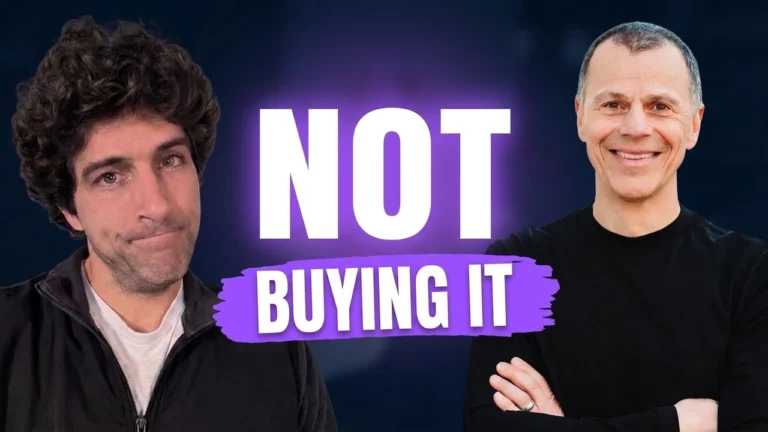
Not Buying It: Hamid Ghanadan on Selling to Scientists, Doctors, and Professional Skeptics
Hamid Ghanadan
Episode Notes
Summary
In this episode, Hamid Ghanadan, biochemist and founder of LINUS, explains how scientists, doctors, and other skeptical buyers actually make decisions, why more proof and more features often backfire, and how service business owners can earn the right to persuade by leading with an insight their buyers already half believe.
Takeaways
- Why marketing capabilities and targeting tools don’t add up to a strategy
- Finding the “secret” that gives you an edge your competitors can’t see
- The four psychological states buyers move through, and the filtering state where most messages die
- Why the company that names a problem buyers didn’t know they had usually wins the sale
- How a ventilator company won market share by reframing its story around ICU over-sedation
- How AI is changing the way skeptical buyers research and make decisions
Chapters
00:00 Introduction to Hamid Ghanadan and LINUS
01:03 From biochemistry to marketing: finding a third way
04:51 Information overload and the attention problem
07:39 Why capabilities don’t add up to a strategy
09:21 The secret weapon every strategy needs
11:29 The four psychological states of buyers
15:02 Filtering: where most marketing messages go to die
15:53 How skeptical buyers decide at home: roofing and water filtration
19:19 Why the company that names the problem wins
19:45 Case study: the ventilator feature nobody cared about
24:10 Selling the outcome, not the feature
24:55 How AI is changing skeptical buyers
28:08 Key takeaways and where to find Hamid
Links
Learn more about LINUS: https://thelinusgroup.com
Get Hamid’s book, Not Buying It, on Amazon: https://a.co/d/05ZyJWyX
Find Hamid on LinkedIn: https://www.linkedin.com/in/hghanadan
Free High-Converting Website Checklist: FroBro.com/Checklist
Transcript
Jeffro Fulkerson: 0:18
What if the buyers who control the biggest budgets are trained to reject almost everything you say? Hamid Ghanadan has spent nearly three decades on that problem. He’s a biochemist who founded Linus in nineteen ninety-six. He works exclusively with life science, biotech, and healthcare companies, and he built a behavioral model for how scientists, doctors, and engineers decide things. He’s the author of Persuading Scientists, Catalytic Experiences, and his newest book, Not Buying It. So over the next twenty five minutes or so in this episode, Hamid’s gonna unpack Why technical audiences decide differently, the myths that kill persuasion, and where digital marketing in technical B2B went bankrupt. and what general service business owners can do when their buyers are skeptical. So Hamid, welcome to digital dominance.
Hamid Ghanadan: 1:01
Nice to be with you. Thanks for having me.
Jeffro Fulkerson: 1:03
Well definitely. I I’m very interested and curious about your background and how you got into this ’cause it seems like you were pushed toward medicine or engineering, but instead you found a third way into both art and science. So how
Hamid Ghanadan: 1:15
Yeah.
Jeffro Fulkerson: 1:16
did that shape Linus and and the work that you do now?
Hamid Ghanadan: 1:19
Yeah, so I was this, this goes way back now. I’ve been doing Linus for 30 years. So we’re going way back. And I I think I always just had this chip in my brain that I was entrepreneurial. And, you know, being being b you know in a family of immigrants, I was really highly encouraged to go into, you know, engineering or or medicine. But my mind was just, you know, a combination of both more creative and more I was just really. really wanted more creativity and I really wanted more freedom. I also came from poverty and I in in retrospect I knew that I whatever it was that I wanted to do was really to never put myself in a situation of poverty again. And so I think just naturally I started to gravitate toward this idea of how do I, you know, g given my education in biochemistry, what other way what other opportunities there are in front of us. And it was the dawn of the internet. So this was in the 1994 as I was thinking about this, 1995, where most of the companies that were selling to me in the lab didn’t even have a website. You know, they didn’t really communicate via email. And I saw that opportunity and I started to develop and articulate ways that they could use digital as a means for either describing their customers or or describing their offerings or attracting customers. And and that’s really where the the start of the start of the journey was. And then, you know, obviously I’m a biochemist and I was humble enough, not not every scientist is, but I was humble enough to know, okay, just because I know science doesn’t mean I know everything. And
Jeffro Fulkerson: 3:09
Mm-hmm.
Hamid Ghanadan: 3:10
So I started to become a student of how this stuff works and how marketing works and what marketing is even all about. And I read lots of lots of books until I until you they all start to sound the same and you see the pattern and you’re like, okay, I’ve I I got it. Now let’s see what’s missing in the markets that I want to serve, which was, you know, the markets that I was bilingual in, i.e., scientific and and and medical markets. And so then I started to really experiment on what was missing there. And what I found is that, in fact, people who are technically trained act a little differently and and and they make decisions a little differently than than other people. And so that’s basically why we developed the model that we did, and that’s basically the story of Linus and how it started and where it’s at.
Jeffro Fulkerson: 4:03
Well it’s very cool. And it’s interesting you mentioned, obviously having that scientific background, I think that’s a a huge advantage when coming in to study marketing because I think from the outside someone who hasn’t studied it might think, it’s some magic incantation if you just either know how to run ads and get viewers or you don’t. and if I just learn these special steps, I’ll figure it out. But it’s a it’s more of a science where you have to have a hypothesis and then you test it. Of course there’s real money behind your tests and you might lose some, but you have to keep doing it until you figure it out. And so I think that’s really interesting and that probably helped you a lot. I’d I’d be curious to hear, you know, as you’re studying human behavior with Linus and everything, is there a problem that you see you know, maybe something saw even Back then in the late nineties, that you still see marketers getting wrong today.
Hamid Ghanadan: 4:51
Yeah, I I I think that central thesis or the central kind of missing piece has changed over the over the decades. the the key the key change has been that arguably the supply and demand equation on the availability of information and the attention available to consume that information is flipped.
Jeffro Fulkerson: 5:16
Mm-hmm.
Hamid Ghanadan: 5:17
you know, I I I remember hearing a stat like 12 years ago, that the total content on the internet was doubling every 72 hours. That was
Jeffro Fulkerson: 5:29
It’s ridiculous.
Hamid Ghanadan: 5:30
12 years ago that was happening. I can’t even imagine what that rate of change is now, right? But
Jeffro Fulkerson: 5:36
Yeah.
Hamid Ghanadan: 5:36
it’s but it suffices to say that, like maybe all of your listeners and me and you, there’s more content that we’re exposed to that we’re like, that sounds really interesting. I’m never gonna get to that. and then it’s gone,
Jeffro Fulkerson: 5:50
Yeah. The watch list is so long.
Hamid Ghanadan: 5:54
It’s just so long. And I mean, even like in my lifetime, if I were to retire today, I couldn’t even read all the books that I want to read before I die. You know, and those are just books, that’s just one medium. And so I think that I started to see that happening, not at the very, very early stages, but I started to see that happening in the mid-2000s to by 2010. I was like, okay, the writing is on the wall. There’s going to be a tipping point here. I don’t know when it is, but there’s going to be a tipping point here. And and and also, you know, as a strategist, you want to not just sort of finding the trend is interesting. Asking yourself what could upset that trend is more informative. And so I started asking that question back then, like, okay, what everyone was in the social media craze. everyone was posting, cat pictures and food pictures and like oversharing on social media. And I asked myself, what needs to be true for people to like get off of this, you know, addiction?
Jeffro Fulkerson: 7:02
Mm-hmm.
Hamid Ghanadan: 7:02
And I thought, okay, a major security hack could do it. a a major change where people feel manipulated by social media could do it. and so you start to basically model these things out and you’re like, okay, this is not a forever line. Something is going to upset this. I have no idea when, but it’s going to upset it. But that that that’s
Jeffro Fulkerson: 7:27
Mm-hmm.
Hamid Ghanadan: 7:27
really and and here we are today with AI creating more content, it is like that that supply and demand has just flipped. And so looking forward, I think businesses, whether you’re small or large, whether you’re service business or or technology business, whether even you are B2B or B2C, you have to contend with that idea. And so there’s every day there’s new technologies that promise better ways to target. And I and I and I do a lot of public speaking. I say this a lot when I start. I’m like marketing is a Amazing if you think about where we are today. Look at how much capability that we have. We could create content in 30 seconds. We could pinpoint the person in the moment that they need to make that decision. And we could make these precision strikes on our target customers. And yet, It’s harder than ever before to get someone to respond. It’s harder than ever before to make that dollar. Why? What is the what is the what is the gap? Right?
Jeffro Fulkerson: 8:42
Right.
Hamid Ghanadan: 8:43
And it’s because all of those things, all those capabilities, doesn’t add up to a strategy. It’s all those capabilities are just capabilities. And yeah, you could use those capabilities, and you’re still gonna be like, at on par with everybody else.
Jeffro Fulkerson: 9:01
Right. ‘Cause i I mean y a random strike isn’t gonna necessarily be enough, right? Cause the first time somebody hears about you they don’t know like and trust you enough to buy from you and they probably have lots of questions. So if you have a strategy you can come at them from different angles, with text message follow ups or mailers or whatever else, to actually have a more effective message to get across to them.
Hamid Ghanadan: 9:21
Yeah, I think I think the you know the the idea, you’re absolutely right. I think the idea is a strategy basically says, okay, how are we gonna get from where we are today to where we wanna be? That’s really, that’s really, I mean, it’s a fancy word and people throw it around, but it’s just like the how. How are we gonna do this? Right. And in order for for a strategy to be powerful and ownable as a business, you need a secret. You need a secret weapon in there. So none of that stuff that I just talked about is a secret weapon. A secret weapon could be like, when a client customer goes and applies for a loan is really when that signals that they’re going to buy such and such. And therefore, that’s when we’re we need to get in front of them. That could be a secret. Now, more and more like digital footprints can allow you to do that with signaling and there’s tools that can allow you for for signaling. But even more fundamental is like this idea of the the the secret is like if X and Y happens, then we have a better shot of winning than our competitor. Right. And then you basically
Jeffro Fulkerson: 10:30
Right.
Hamid Ghanadan: 10:31
orient all of your tactics, whether digital, terrestrial, whatever, in in making that, you know, realizing that secret, that what that hold what that
Jeffro Fulkerson: 10:43
Yeah.
Hamid Ghanadan: 10:43
secret holds. So We think about that a lot in in the, work that we do for our clients is like, what’s our client’s secret? How can we go and get one for them? And so we do a lot of market research, to be able to
Jeffro Fulkerson: 10:55
Yeah.
Hamid Ghanadan: 10:55
unearth that secret. And then the strategy is built around that secret.
Jeffro Fulkerson: 10:59
Yeah, I like that that concept of it being a secret too, because if you have information that your competitor doesn’t have, that is a an unknown advantage that they don’t see, right? And so they’re like, How are
Hamid Ghanadan: 11:10
Quite literally.
Jeffro Fulkerson: 11:10
they getting all these people? I’m not gonna tell you, right? You gotta figure it out yourself. So that makes it fun. Now I I like so that was a great overview. And I’m curious to hear from you also, as you know, you’ve looked at how buyers buy and make decisions and all this is a big part of your new book, not buying it. You got the four psychological states. can you walk through some of those at a high level and kind of help us understand what our audience might be?
Hamid Ghanadan: 11:40
Yeah. So so most people so I deal with companies that have technical stuff. So a lot of times the end customer is a scientist or a doctor or an engineer. And but but this is not focused exclusively on these people. I think it fits anywhere somebody’s making a logical decision. the the myth is, you just want to give them lots of evidence. And because these are numbers people and they just really want to see for themselves. And that’s true, but it’s not true as uniform across the entire buying journey. So what
Jeffro Fulkerson: 12:18
Mm-hmm.
Hamid Ghanadan: 12:19
makes a scientist or a doctor different? And I can’t speak for you know non-technical professionals because that’s just really not my expertise. But in in the area that is my expertise, every human being is driven by logic and emotion. So that’s one axis. But the more technical the decision, you’re also driven by a heightened sense of skepticism. So, but skepticism is also on a spectrum. The other side of skepticism is curiosity. And so I know that in science, if you’re not a curious person, you’ll never make a you’ll never make a discovery. And so you can’t just rest in your skeptical state. And so
Jeffro Fulkerson: 12:59
This is
Hamid Ghanadan: the key is: 13:00
okay, now we’ve got these four, we’ve
Hamid Ghanadan: 13:03
got these two axes, right? Logic and emotion. Skepticism and curiosity. Now, if I put information in front of a scientist or somebody technical that gets them curious and they have like a personal emotional reaction to it, they usually have a
Jeffro Fulkerson: 13:21
Mm-hmm.
Hamid Ghanadan: 13:21
burst of creativity. And creativity for a scientist is like it’s like catnip. They love having this creative thought. And so that’s really what hooks them to start on the rest of the journey. And the rest of the journey then isn’t just to go buy something or go do something. First, they have to form a hypothesis about, and really here they’re they’re asking themselves four questions. Is my creative thought real? Is it is it relevant to me? Like, is it going to change my life in one way or another, or change my work in one way another? Can I actually do something about this? And then, if I do something about this, will I succeed? So that all of those are like the hypothesis stage. We can’t overly sell to them in that stage because they’re kind of like throwing it up all, you know, throwing all of those questions out and trying to come up with an answer for themselves. Once they have that answer, is the first time that, as like a business or a value proposition, you’ve earned the right to persuade them. That’s the first time that persuasion comes in. Everything before that is their game. It’s their show. but as a really smart marketer or an entrepreneur entrepreneur, you can actually help them shape that entire journey. You just can’t sell to them right away. So by extending that, you know, businesses can actually open up new markets for themselves, you know, and and and and essentially go into those stages. So so I just gave you three of the four states. The The fourth state is filtering. So that’s when you’re in the skeptical side and you’re also on the emotional side. And that’s where
Jeffro Fulkerson: 15:12
This is
Hamid Ghanadan: 15:13
most of our messages go to die, is in that filtering quadrant. And that’s just a quadrant to stay away from. So you
Jeffro Fulkerson: 15:20
Mm-hmm.
Hamid Ghanadan: 15:25
is my content, is my motion, is my marketing, is my sales, is it going to generate curiosity or skepticism? And do I have enough of a balance between things that are going to resonate with them emotionally and things that are going to resonate with them logically? Because you need both. And so that’s really the that’s really the the the fundamental basis of the model that that we practice at Linus.
Jeffro Fulkerson: 15:53
I I like that a lot. It’s very clear and easy to understand, you’ve articulated well and I can now have a framework to work within when I’m approaching a buyer. Now I I have a question because obviously you talk about these are scientists or whatever, their brains work a certain way. But does the context in which that person where they exist as a buyer, does that im affect how they make decisions? So for example, that doctor owns a home, right? Is the professional home services provider, the roofer or you know, repairman or whatever, selling to that doctor something for his home different than when the doctor’s at work and he’s buying supplies or w whatever equipment he needs. Is it the same or do the is their brain work differently?
Hamid Ghanadan: 16:41
Yeah. so so there no, the brain works the same. And even if you’re not a doctor and you’re choosing sort of a roofing contractor or a roofing product, you will go through a very much the same approach. the difference is that you the need is usually the need in a situation like that manifests itself. I just had a hail storm. My roof got damaged. I need a new roof. There’s no question as to whether you need this thing or not.
Jeffro Fulkerson: 17:11
Right.
Hamid Ghanadan: 17:12
The the it becomes a little bit more murky when you’re trying to sell something to someone that they don’t know they need, but you are convinced it will help them in their lives, one way or another.
Jeffro Fulkerson: 17:23
Let’s say water filtration, right?
Hamid Ghanadan: 17:26
Water filtration system is a is a perfect example. So that person, that that that prospective customer still goes through those exact same stages. So number one is like something has to capture their curiosity and they have to have an emotional resonance with it. Wait, you mean washing my fruit with water coming out of the tap is actually making it dirtier? Tell me more, right? because I have a family. I don’t want to put dirty fruit, into their bodies. I don’t want to eat dirty fruit. Like that right there is that is that first quadrant. That’s the catnip that gets everybody hooked. Then the next phase is like, some people are like, okay, yeah, fine. Put up you let’s just get this thing and it’s a it’s an impulse buy. Because in that situation, the the negative outcome is not really that negative. But In a doctor’s office, a negative outcome is catastrophic. But it’s still
Jeffro Fulkerson: 18:24
Right.
Hamid Ghanadan: 18:25
the same thing. so most people are then gonna say, is this really true? Like, is the water really that dirty? Or you you know, so they’re gonna want to go through that process of like, what is it gonna take? Are they gonna have to dig up my entire basement to put a giant filter, you know, and and sink it subterranean? Or is this something really easy? What if the company goes under and I can’t get cartridges? Like all of those questions are in that, in that. Hypothesis making zone. So same exact thing as what I just described. And then once they’re like, no, this is something that I can do something about, and I want to do something about it, because I’ve checked it out, it’s real, it’s relevant to me. I can do something about it. And if I do something about it, chances of success are high. Now I’m gonna call up like three or four companies and say, okay, like which, like which, which one am I gonna buy? Right?
Jeffro Fulkerson: 19:18
Mm-hmm.
Hamid Ghanadan: 19:19
The company that’s usually gonna win is the company that actually told you about the problem you didn’t even know you had. Because they’ve already established that rapport with. And that’s what most
Jeffro Fulkerson: 19:29
So that makes sense.
Hamid Ghanadan: 19:30
companies miss. They’re just like, hey, we’ve got f water filtration because your water’s dirty. you know what I mean? It’s not, it doesn’t they don’t really think about the entire buying cycle.
Jeffro Fulkerson: 19:39
They’re waiting for the people who already know they need it, right? There’s different buyer stages. So Okay.
Hamid Ghanadan: 19:43
That’s right. That’s right.
Jeffro Fulkerson: 19:45
So I like this this is helpful. We’re talking pretty high level, in theoretical. Can you give us a concrete campaign that maybe you worked with or with a client where you applied this model and you took non responsive prospects and started getting engaged prospects?
Hamid Ghanadan: 20:05
Yeah, absolutely. so before before the COVID-19 pandemic, not everybody knew what a ventilator was, but then ventilators also all of a sudden became a thing. So more people unfortunately know what it is. we had a client who had a ventilator and and they had this like feature on this ventilator that they just thought was gonna be a total lockout. Like they’re just gonna just grab 80% of the market. And so they went out to market with it and Nobody cared. they didn’t move even a single point in their market share. So they came back and they’re like, okay, obviously what we’re offering is is critical and important, but we just why why isn’t the market reacting the way that we want them to react? So we so basically the the premise is this, heaven forbid. Any of your listeners or you, anybody in your family ever needs to go on a ventilator, it is a really agitating experience. Even if you’re like, even if you’re subcont even if you’re unconscious because you’ve been in a car accident or something like that, it’s still really agitating. Because the human body doesn’t breathe. just look at your like, if you have a an Apple Watch, it’ll tell you, like, you breathed 12 breaths last minute and now you want 16. And even when you’re sleeping, like there’s a variance in how many breaths per minute. But ventilators just are like aspirate, dispense, aspirate, dispense, aspirate, dispense. So you feel like you’re out of breath after a certain point, or you’re like, you’re like gasping for air and you can’t get it. So it’s it’s a terrible experience. So what this client had done was they created a sensor that sits on the chest, and when you flip it on, the body triggers the ventilator, like just
Jeffro Fulkerson: 21:52
Hmm.
Hamid Ghanadan: 21:53
breathes in like more. More variable the way that a body wants. Brilliant. Nobody cared. And the reason when so when we did research, we found out that the reason why nobody cares is because they just sedate the patient. They’re like, you’re uncomfortable, you’re agitated, let me give you some drugs. The problem is over-sedation was and I think continues to be a really big problem in the ICU. So
Jeffro Fulkerson: 22:21
Yeah.
Hamid Ghanadan: 22:22
They’re they’re disincentivized to give these things to the patient. And here’s one reason why they give it to the patient, and they can just completely remove it. And so essentially, what we did was instead of going to market and saying, we have this ventilator that can remove sort of the patient asynchrony, which is what that phenomenon is called, we went in and said, Did you know that 42% of ICU patients are over sedated? Do you want to know how to make sure that your next patient isn’t one of them? Totally different story, had nothing to do with a ventilator.
Jeffro Fulkerson: 22:58
Right.
Hamid Ghanadan: 22:59
And because it was such a big deal, all the ICU people were like, what are you talking about? Like,
Jeffro Fulkerson: 23:05
Yeah.
Hamid Ghanadan: 23:06
who are you? And why are you asking about my over sedation regime? You know, like, and so essentially we just unpacked it. We said, here’s the data and the is that There’s actually five causes of over sedation. And one of them is asynchrony. And so the moment they saw that, and then immediately the the new value proposition for this ventilator was this thing breathes like a human. And this the story just told itself. So it significantly
Jeffro Fulkerson: 23:39
Right.
Hamid Ghanadan: 23:41
changed this company’s market share. And it significantly changed the the the buying cycles, the the number of ventilators that that the hospitals were buying
Jeffro Fulkerson: 23:50
Sure, yeah.
Hamid Ghanadan: 23:52
per per unit and everything. So that’s just an example by just flipping it into a new story, right? Every everybody talks about how storytelling is the most important thing that we can do. But what is that story? Is like the the model that we perform gives you that prescription to write that story.
Jeffro Fulkerson: 24:10
Right. And and it lines up with traditional marketing knowledge, which is instead of selling features, you sell that the outcome, right? The benefits. And that’s all you did. Instead of saying it works this way and that’s better, it’s like you talk about what h how it affects the patients and the ICO the ICU rates of over sedation. So
Hamid Ghanadan: 24:29
Yeah. Yeah. it was it was what was phenomenal and we never planned this, but anytime there was a story in like the major media about over sedation, we had an over sedation microsite for this company and their traffic just went through the roof. So and it just happened over and over again because this was an ongoing problem. So yeah, that’s just one one story.
Jeffro Fulkerson: 24:51
Yeah. That’s a great example.
Hamid Ghanadan: 24:54
Yeah.
Jeffro Fulkerson: 24:55
so I I wanna ask one more thing before we kinda wrap up here. I was curious w what do you think how’s AI changing the behaviors of technical buyers, skeptical buyers, just everybody, you know, and what should we be doing differently when marketing because of it?
Hamid Ghanadan: 25:11
Yeah. the the honest answer is that AI is changing so fast that I think the human brain is incapable of actually adapting to it. So we are we we we’re just like the human brain is just swimming as hard as it can right now against the tide to just try to like not, you know, just try to keep up. and so behaviors are changing indeed. there’s the obvious where most of this dialogue that I just talked about. No longer happens with the company, it happens with AI. And so we’re seeing this in even in technical settings. We actually do a lot of research on this. And so when scientists do experiments, there’s seven steps to the experiment from like coming up to the idea to like the protocol to buying the stuff they need to actually running it and troubleshooting it. And then analyzing the results and communicating those results. So seven steps. We call that the experimental life cycle. And we just did a research project to and we did one last year, and then we just updated it. Where in those stages are AI chatbots one of the sources of information for scientists? And even though chatbots say on the bottom, like AI can make mistakes, scientists are relying on AI. To help them with all of
Jeffro Fulkerson: 26:35
Yeah.
Hamid Ghanadan: 26:36
those decisions at every stage. And so it’s it’s becoming, I I wouldn’t say that it’s really that high in in science, it’s like in the mid teens of people who are using AI in in each of those stages, but they’re using them. That’s more than zero. And that’s a lot, you
Jeffro Fulkerson: 26:54
Yeah.
Hamid Ghanadan: 26:54
know, 15%. And I think that’s underreported in fact. So but the lay people are actually having these like, Com deep conversations with AI to help them make those choices. They’re going through the exact same like process as what I just talked about, like the kinds of questions that they’re asking AI and the kinds of follow-up questions they’re asking AI. But what’s being missed is the company, the brand, the salesperson, the rep, you know. And so
Jeffro Fulkerson: 27:23
Right.
Hamid Ghanadan: 27:23
not to say that we should cede ground to that. I actually think that. Several of our clients are asking us, and we’re we have some really amazing success here. What is the role of the company and the sales rep in this new world? Because you can actually now provide new value, different value. And so and and so we’re working with them to to think about what that’s going to be. And connection is really something that’s never gone away, the need for connection, the desire for connection. And I think in this increasingly digital world, more people are going to want more connection. And so we’re banking on that and and we’re seeing some amazing results with our clients.
Jeffro Fulkerson: 28:08
Yeah. Well I I think that’s a a great place to stop here because it’s gonna be interesting to see where it goes. like you mentioned, AI is changing so fast and it is hard to keep up, but it is definitely having an impact. So we have to pay attention, we have to adapt if we want to continue to be in business and get our product in front of people that need it. So I appreciate you coming on the show and walking us through this. I love the framework and how practical it is. So hopefully the listeners, you guys can take something away. meet your buyers in the right psychological state. have some research that you’ve done so that you can lead them with that outcome and earn the right to persuade them effectively. So Hamid, where can people find more about you and Linus?
Hamid Ghanadan: 28:53
Yeah, thank you. So our website’s thelinusgroup dot com. My book not buying it is on Amazon. I think that’s a that’s another way to connect with me. And then on LinkedIn, it’s H Ghanadan or Hamid Ghanadan. I think I’m probably the only one if maybe maybe there’s another handful of Hamid Ghanadans, but
Jeffro Fulkerson: 29:09
Awesome. well once again, guys, thank you for listening. Make sure this week, why don’t you pick an offer or page that is aimed at your most skeptical buyer? You can rewrite the opening so it leads with maybe an insight they already half believe, rather than some claim that they’re going to filter out in two seconds. So thanks again for listening to Digital Dominance. Please subscribe, leave us a review, and take care. We’ll see you next time.
More Episodes

© 2016 – 2026 FroBro Web Technologies
27472 Portola Parkway #205-241, Foothill Ranch, CA 92610