
Podcast Episode
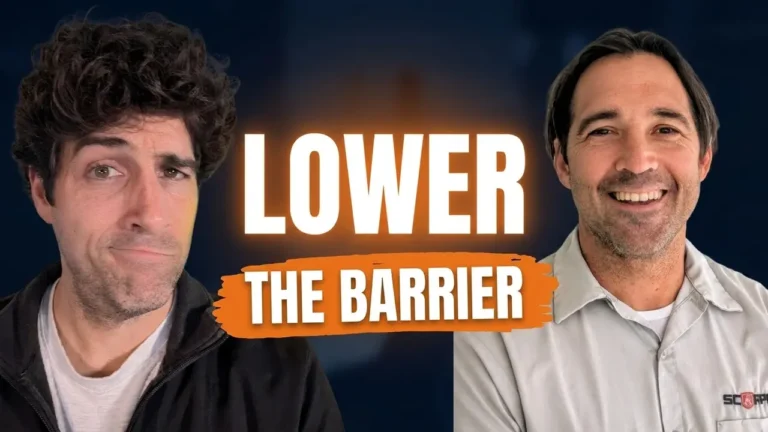
Lower the Barrier: Clayton Tomasino on Cracking a Market Built to Keep Small Operators Out
Clayton Tomasino
Episode Notes
Summary
Clayton Tomasino, CEO of Scorpion Protective Coatings, shares how his family business grew from a small startup to a nationwide company by leveraging innovative marketing, strategic positioning, and continuous improvement. Discover practical insights on competing against big brands, building dealer networks, and using technology to empower small businesses.
Takeaways
- Business growth during recession
- Market positioning and branding
- Leveraging digital marketing and PPC
- Building and managing dealer networks
- Using technology to improve service and training
- Strategic planning and goal setting
- Balancing innovation and responsible growth
- Customer feedback as a growth tool
Chapters
00:00 Introduction to Clayton Tomasino and Scorpion Coatings
01:01 The origins of the family business and initial growth
02:18 Using digital marketing to grow in a niche industry
02:47 Navigating recession and market downturns
04:11 Positioning products for recession-era entrepreneurs
05:22 Turning challenges into growth opportunities
05:59 Diversification of product and service offerings
07:18 Marketing strategies for different customer segments
08:14 Identifying gaps and opportunities in the market
12:16 Innovating with technology to empower installers
13:38 Developing tools to reduce training and employee turnover
15:29 The role of software and mobile solutions in business
19:37 Balancing innovation investment with responsible growth
21:21 The importance of clear goals and team alignment
23:33 Creating a culture of continuous improvement
24:15 How to connect and collaborate with Clayton
Links
Exclusive Digital Dominance listener offer (free Scorpion Scan Bundle): https://dominance.buyscorpion.com
Website: https://buyscorpion.com
LinkedIn: https://www.linkedin.com/in/claytontomasino/
Instagram: https://www.instagram.com/scorpioncoatings/
YouTube: https://www.youtube.com/@Scorpionwindowfilm
TikTok: https://www.tiktok.com/@buyscorpion
Free mobile tint app: https://buyscorpion.com/pages/free-mobile-tint-app
Free High-Converting Website Checklist: FroBro.com/Checklist
Transcript
Jeffro Fulkerson: 0:17
What if the fastest way to grow in an old school industry isn’t outspending the big players, it’s lowering the price of admission for everyone else? Clayton Tomasino is CEO of Scorpion Protective Coatings, a family-founded Indiana company that started out spraying truck bedliners and grew into a five-time Inc. 5000 company. Today, Scorpion supplies window film, pay protection film, and coatings to a nationwide network of independent shops and builds Scorpion Scan, an app that lets installers run jobs from their phone, all without venture capital. Now today Clayton shares how a trade business actually markets and grows, finding gaps that competitors ignore, building a dealer network, and dodging the cash flow trap that can sink profitable companies. So Clayton, I’m excited to have you. Welcome to Digital Dominance.
Clayton Tomasino: 1:01
I thank you, excited to be here, Jeffro. And yeah, hopefully I can impart something that’ll the viewers will like.
Jeffro Fulkerson: 1:07
Yeah, I think so. we got a lot to talk about here. so with Scorpion, it started with your dad, Randy, right, building a simpler bedliner system, right, than some of the big franchise brands. So what was that business like when you came in as CFO and you know, what did you see that it could become?
Clayton Tomasino: 1:24
Yeah, so when I came when I came in, it was about two thousand six, two thousand seven, and the business was really a very small business. It was about just about a one million dollar business, and it was really kind of just a hobby on the side for my for my father. our main business growing up was asbestos removal. I was kind of a farm boy, and asbestos removal was really kind of the family business growing up, and then they had to shutter that business in about two thousand six. So they were launching Scorpion as a primary business, and then they invited me to come back and help them build that out. So yeah, came back and it was just around a million dollar business. at that point in time we looked at some of the packaging and kind of just looking at feedback from the customers. That was really the first thing we did was kind of solicit feedback from the customers, which allowed us to change packaging and do things like that. that allowed us some growth, and then That was in the mid two thousands and in the industry we were in we were able to really kind of use AdWords like Google PPC and things like that to grow in an industry where no one else was using that. so that allowed us to kind of do our first initial growth phase.
Jeffro Fulkerson: 2:33
Right. And you became CEO in around two thousand nine, but that was also when a lot of the truck market was going south. So I I’m curious to hear from what was it like going through that? What did you have to change to help Scorpion get through that period?
Clayton Tomasino: 2:47
gosh, yeah, yeah. Yeah, that was the for better or worse part of it. it’s I come in in two thousand seven, then yeah, two thousand eight, two thousand nine, yeah, you have a big crippling recession that that happens. So not a great time to be a first time CFO of a family business, you know, because yeah, it’s a lot of lot of pressure and of course I knew, absolutely.
Jeffro Fulkerson: 3:05
Yeah.
Clayton Tomasino: 3:07
Nothing about doing that. but yeah, so we were able to pr salvage a lot. Like I said, we were we were growing through two thousand eight. Then two thousand nine, yeah, it was the whole vehicle market kinda crashed. Everything crashed though, through two thousand eight and two thousand nine. But we were able to salvage it enough. in a way we grew. We we all we’re only down eight percent, which I think at that point in time in the market when everybody was down like kind of twenty percent and everything like that, it was actually a win.
Jeffro Fulkerson: 3:40
Yeah.
Clayton Tomasino: 3:41
But it was it was tough, no doubt. I mean it was, you know putting pretty much the whole business on personal credit cards and yeah just trying to make do with whatever you can. It’s pretty much living a almost a paycheck to paycheck existence. But you know, able to make it through and then about two thousand nine and on, I think we kinda started growing out of it and group able to grow twenty percent, twenty percent, able to grab market share. The advantage that we had was actually kind of where we positioned ourselves in the market. Because The way the material was made and the way it was packaged was to go counter against these big franchise systems and these high pressure systems. So the actual what we were selling was it was a batch mix system. It was a low barrier, low cost to entry system. So in a way it was perfect for people in a recession and coming out of a recession, because people were looking for opportunity but they didn’t have any money. So, it’s all about getting in there and positioning yourself correctly in front of the the right crowd, in front of the the right type of entrepreneurs, and in front of those people that were looking to move forward, and really give those people that were now unemployed an opportunity to self-employ themselves. and we were able to really do that, you know, use the ethos of the company of, you know, giving giving that low low barrier to entry, helping entrepreneurship and really grew through that.
Jeffro Fulkerson: 5:13
Yeah. So you took what could have been a disadvantage, turned it into an advantage.
Clayton Tomasino: 5:18
Yeah, yeah.
Jeffro Fulkerson: 5:18
Causing a lot of other companies to suffer, but you actually use that to grow. I like it.
Clayton Tomasino: 5:22
Yeah, yeah. that’s to me that’s kind of business. That’s the creativity of business, you know. you just look at a lot of times there’s beauty found in debris, you know, so you know, you you’d almost look at the wreckage and instead of you could you could sit there and be like, my gosh, there’s nothing to do or you could do something about it, you know.
Jeffro Fulkerson: 5:41
You can complain or you can adapt and be creative.
Clayton Tomasino: 5:44
Yep, yep. And we’re definitely a do something about it culture here. Yeah.
Jeffro Fulkerson: 5:48
Okay. So help me understand the business just a little bit. Obviously you got the product of the liners. Is there are there services attached to that like installation? Are there other unrelated services that aren’t connected to a product that you offer?
Clayton Tomasino: 5:59
Yeah, so for us I we’re all about servicing other businesses. So at this point in time in the business, we still, you know, truck bedliners and kind of that high build, high abuse coatings, that makes up about forty percent of the business. And about the other sixty percent of the business now are film. So it’d be window film. So if you buy buy a new car and you get your windows tinted, we’re now on we supply that, we’ll supply the tools and now the software. for people to install that onto vehicles. So we’re all about focusing on supplying other small businesses with the tools to help them prosper.
Jeffro Fulkerson: 6:38
Right. And so you’re a hybrid between a product company and a service company. do you when you’re doing your marketing and ads and things, do you promote both? Do you just promote one? Do you approach it any different for one side of the business versus the other?
Clayton Tomasino: 6:52
I think I think originally, yeah, we would you’d really kind of look at you know, different ways to approach it. So it’s changed over time because say back in like the early early two thousand tens, you know, the truck market was very much a rural market and the window tent market was very much an urban market. As time’s gone on, I think it’s become more of more homogenized, I guess, in a way. Either that or we’ve learned how to not not segregate it as much, and learn how to get the message across of what we actually do. And what we actually do is empower those small businesses and enable entrepreneurs. and that is really our focus. So we don’t really at this point in time, we don’t really do too much change in terms of our marketing across channels. we’ll you know, ’cause way we see it is that we’re offering, tools and services out to entrepreneurs to help them succeed.
Jeffro Fulkerson: 7:53
Mm-hmm.
Clayton Tomasino: 7:54
The products are all in a way the same. You know, it’s just people’s interests or people’s capabilities are different.
Jeffro Fulkerson: 8:01
Gotcha. So what about someone who’s listening to this? how can what advice would you have for them if they feel like they need to start competing against franchises or big brands? How can they spot a gap that the competition’s overlooking?
Clayton Tomasino: 8:14
so the first thing I would do, you first you gotta get out there and I mean you gotta hustle first. So you gotta you gotta know what you wanna do. You gotta know kind of get an idea of your market. So, you know, if you’re a window tenor or you’re in the codings business or you know, whatever it is, first put yourself out there, be consistent on What however it is that you’re marketing, because marketing and promotion always comes first. Make sure that you’re hitting all the free channels as much as you can and don’t be bashful about it. I think that was a problem that I had for a long time, about like even myself personally being out front of the company. so you know, make sure that you’re putting your personal self out there. Don’t be bashful about it. and really, yeah, approach it that way. And then once you get out there, once you start getting customers, make sure that you’re constantly soliciting feedback. Because I think another another thing is, not just selling a product or selling a service and thinking that that is correct. no thinking that you know what the customer wants. Always look to improve. Always look to see how you can better serve those customers. And the only way to do that is to ask, is to always ask, hey, how can we do better? What’s your opinion of this? what would you have liked to have seen? just keep soliciting feedback, keep soliciting feedback, because that’ll allow you to keep tweaking your product or keep tweaking your service, which is just going to help you get better and better and better and better, and eventually allow you to probably charge more for different services and things of that nature as you move on.
Jeffro Fulkerson: 9:55
Yeah, no, that’s helpful. And and so at this point, do you spend most of your marketing efforts towards promoting to the end consumer or to building out your dealer network and partners?
Clayton Tomasino: 10:06
We spend a lot of it a lot of it is still spent in dealing out or building out that dealer network. So especially with our software, I mean we just have such a kind of a wide market of that. But one of the things that we’re now focused on is tying especially on kind of automotive window tinting services and paint protection film and even residential and architectural film. and bedliner services too. But really getting out there in front of consumers and tying those back in, I think that there’s such a from a a I guess for lack of better phrase, a corporate perspective, there’s such an opportunity there that, most other manufacturers they really aren’t they don’t care that much about about the entrepreneurs that they serve or the business owners that they serve. you know, so that actually it’s it something a big focus for us as we move out move throughout the year, especially with our software component, is being able to tie a lot of these digital ads or say streaming ads, streaming consumer ads, and getting those coming back in through channels, back into the installers themselves, and then creating that whole channel. Because I think that’s a value that we can provide, a value that we can provide in real time. And a value that’s just not that’s just not done. And it’s just such a missed opportunity and it’s just really once again, it’s the right thing to do, and it’s also an opportunity. So it’s it’s a win win win situation all the way across the board.
Jeffro Fulkerson: 11:42
Yeah, and I think there’s it’s easy if you’re in the an industry that, quote unquote is low tech. it feels like you might have to do things that way. And there’s no way to improve it because you know software’s not going to replace it, obviously, but you can use software to improve how you provide the service or deliver right. And so I like that you’ve added on layers of technology, not just to track your marketing, but you’ve got things like Scorpion Scan, right? Which is helping the installers you know, and your dealers to actually quote and get through the process better. So how long how did that come about? How did you figure that out?
Clayton Tomasino: 12:16
Well that came about it came about as actually in a in a twofold scenario. So it came about in a kind of a direct competitive vein for us. So we were competing against other much larger manufacturers because we’re much larger manufacturers out in the window tent arena. so we needed something to really kind of help us compete. So it was a tool to help us compete, first of all. Then the second thing is is that when we this has been a longer term project. When we start first started working on this, which now ranges all the way back to about three or four years ago, the biggest problem that people had at that point in time was really they were losing employees and then training new employees, and it was just holding all of these businesses back. And we have this fabulous kind of opportunity, we have this you know great a great ecosystem of small business installers. we have thousands of these small business installers that we sell to and work with every day. So it’s just fantastic. And but they were just they were losing installers, but then when they would try to bring somebody in and then they would train them, but then they would leave and it was just causing these business to always kind of be stuck in like a kind of a running.
Jeffro Fulkerson: 13:36
In that loop.
Clayton Tomasino: 13:36
running in motion sort of format. So we were trying to just come up with ways like how can we help them? How can we keep the ease their training burden, make something so it’s easier for them to get somebody in their shop installing, help them, and then if they do lose them, get the next person in that shop installing and helping. And so, this is this is kind of an answer to this is very much an answer to that as well. and then from there, actually it goes back. Some all the other answers go back to what I spoke to earlier. Then we had a big survey of all of our customers, and then we asked, hey, if we did this, what would you?
Jeffro Fulkerson: 14:16
Mm-hmm.
Clayton Tomasino: 14:16
Be looking for? And everybody really wanted to know, well, how much does my material actually cost? because they just didn’t know these numbers. so you know, we’re able to put like a cost of goods sold calculator into the app itself. And you know, now we’re able to we keep getting feedback and now even on the installers, how how it cuts and how it rolls out, we’re able to adjust that pretty much on a on the fly on a daily basis. So yeah, it’s been a r it’d been a really great thing, been a really great kind of feedback thing, feedback loop. But that’s where it was born from. It was born from, yeah, really just kind of getting these smaller shops just the tools that they need to compete and be able to compete at a cheap level. Cause there are other tools out there. Nobody else does it mobile. We’re the only one that does it has a mobile answer to this. People there are other softwares at our laptop that charge you $500 a month, and then you have to buy their film or you have to use a specific plotter. For ours, it costs $30 a month, and we wanted to make sure that it can be used with even the cheapest possible plotter. it communicates via Bluetooth. You don’t even need to be on Wi-Fi. So it’s really made, once again to obliterate barriers to entry.
Jeffro Fulkerson: 15:29
Mm-hmm.
Clayton Tomasino: 15:30
Sort of thing. It’s yeah, we’re very much I like the the rebel factor of it. so it’s it’s all about that. we want to make sure that everybody is enabled to do this. so, yeah, okay.
Jeffro Fulkerson: 15:42
Yeah, well, I and I I I thought you were talking about that. I was thinking about how innovation comes about sometimes and how a lot of owners don’t have the bandwidth to innovate, right? Because they’re the ones stuck in that loop. But you working with your dealer network, you’re outside of it a little bit and you’re looking at them like, how can we help them? What are they stuck on and struggle with? You can ask them and get that feedback, and then you’re able to come up with something. And so having that outside perspective is so helpful. And I think for people listening If you ever get a chance to do that, even with your own team, okay, how can I help my employees or how can I help my customers have a better experience? And that is the start of the innovation process.
Clayton Tomasino: 16:21
yeah, hundred percent. if you’re if you’re a roofer, how can you make that process better, or how can you make the homeowner feel more comfortable? Or, if you’re if you’re HBAC, the same difference. it’s it’s all the same concept. we just so happen to be in window tint installation or coatings installation, but yeah, that the the theory and the concept is the same kind of regardless of industry. always always looking, always being curious about how you can make the experience better, how you can better service the customer and how you can better service your own employees in that regard as well.
Jeffro Fulkerson: 17:03
Yeah. And so here’s a question. You started as CFO with Scorpion. obviously having this one eye to innovation and improving things, that costs money and and time and effort, right? So how do you do you allocate a certain amount of your monthly cash flow towards trying new things or what does that look like?
Clayton Tomasino: 17:21
I think probab we honestly, you know, coming from a finance background, I should probably be a little more tight with it than I am. I think, you know, for us it was really all about, you know, we had grown, grown, grown, and then we got to a point where we’re kind of plateauing, or you got to a slower growth and you know, you know, we really needed to do things. And then when you kind of look when we looked out there And you decided to take a kind of a kind of a moonshot opportunity, you know? And then from there, then yes, then then I have to analyze, okay, how how fast can we do this? You know? I mean, I would love to be able to be like, all right, let’s push it all in, you know, but you know, we can’t do that. And it’s it’s it has been bootstrapped since day one. so yeah, I mean we have to do it only in increments. So, you know, that’s why it’s probably taken say a three year arc and and even the improvements that we make, we can make, yeah, we make each improvement once a month, that sort of thing, you know, because yeah, you’re we’re still working through it. But the nice thing is now, I mean, once you know, I I always talk to guys like as we kind of go through and you you know you’re launching, once you break the atmosphere of it all though, I mean then you’re in, you know, once you’re out of the atmosphere and out of gravity. eventually, we’ll be able to start just really allocating even more to it. yeah. But but yeah, it’s you do. I mean it’s y for better or worse, yeah, you can’t you have to be responsible. You have to kind of keep keep just doing what you can. You know, it’s almost I guess kind of a skunk works fun to it a bit. You know, ’cause I mean we know that you can only allocate say like say twenty five to fifty thousand, you know on each each monthly increment as we grow it, you know, especially when we started. And then as it starts to bring in more income and more income, you know, yeah, then then you keep going. There’s other complic I’ll be honest, there’s other complications that come with it, positive complications, you know, because as the software grows and as adaptation grows, then we also sell more film and we sell more of everything else. So then you have to get more cash allocated out to that as well.
So, you know, it becomes infinitely it becomes infinitely more complicated, which is, you know, once again, to me part of the fun puzzle of it all.
Jeffro Fulkerson: 19:47
Uh-huh.
Clayton Tomasino: 19:47
It’s part of the all the creative part of business, you know, it’s just figuring that out and how can you do it and how can you keep, you know, kind of a forty five degree angle to it. you know, it’s not easy, but you know, that’s that’s the fun of it.
Jeffro Fulkerson: 19:58
Yeah. And I think that is a good reminder about the importance of having a team too with defined responsibilities. Because otherwise, if you’re doing everything yourself, you know, you’re going to get excited by the new shiny thing and you’re not going to service your existing customers and take care of them. Or you’re going to be trying to get new customers and forget that you had to handle this. And so yeah, you’ve got to have a balance and a team to make sure you grow without just undercutting your own success.
Clayton Tomasino: 20:21
for sure, for sure. Yeah, there’s no way that yeah, I there’s no way I could do this alone because yeah, we have we have yeah, customers that we have to take care of and yeah, those same customers that we’re doing this for, we’re gonna do all these other things for too. we’ve gotta make sure that we’re getting them out the phone and we’re doing that correctly and we’re getting it to them on time and package it how they want to and are we communicating with them the way they want to and are we connecting them, in a community in the right way and all these things. So I yeah, it’s this is just, one point of of many.
Jeffro Fulkerson: 20:54
Yeah. So that that but it’s a great it’s always fun hearing from somebody who’s gotten through it and is actually doing it. it’s not just theory. and I love your outlook on it and that every complication, you know, it’s positive because this is what you’re working towards, right? That means you get to keep doing it, you get to improve and and keep growing. So that’s just part of how it works. I know we’re getting closer to the end of our time. I was curious if you had, you know, if someone listening only remembered one idea from this conversation, what what would you want that to be?
Clayton Tomasino: 21:22
you know, I think, you know, for me, I would say one of the big things I’ve been kind of w we’ve been working on this year is really knowing where you’re going and the thing is what we’ve been speaking to as well, but knowing where you’re going and then designing the roadway to get there. You know, so for us, I mean we have you know definite metrics that that we’re trying to attain. and then so we’ll look at that and then we work backwards to it. and then no matter where you’re at in in our system, so you could be a salesperson, you could be a marketing, you could be you could administrative assistant, you could be out in the warehouse, but everybody has a part in that. it’s everything from days to ship on an order to conversion rates on leads to you know return on ad spend. But everybody has a part on attaining that that goal. And everybody has to know what the goal is, and everybody has to have a KPI that they’re responsible to get to that goal. Because I think to me that having that team effort is like a football team, right? the running back or the quarterback’s not going to get anywhere if the line’s not blocking.
Then the play’s not going to go anywhere either. so everybody has to have the right things going all at the right time. And you can only do that if you all know the play. If you all know what you’re trying to do. So I you I think you see that a lot where people just come and they clock in and you’re in business. and you can be in business and you can be in business sometimes for a long time. But to make it exciting and to make it something to where you’re really having fun and you’re really attaining something, you know, put out that goal, give everybody a piece, a a number that they can throw into that goal. And we have a meeting every day, a 15 minute meeting. We all come together and we talk about, hey, this is everybody goes through their KPI, it’s 15 minutes, we’re done, we’re at work, let’s go. And we do that every single day. and I think, I think that’s just that would be my recommendation.
Jeffro Fulkerson: 23:33
Yeah, no, that’s great. I and I appreciate you going through all the the way you run your business. It’s fun to get a glimpse into how things are done and just the ideas that you have and how you’ve approached it. So I think for listeners, obviously take away that you your product’s not going to promote itself. You gotta be creative, you gotta know where you’re going. You know, obviously, like you said, you gotta reverse engineer where you wanna go and then you can make the map to get there, right? But your team has to be part of that. You can’t be so removed as, the owner that nobody knows what’s happening and they’re just trying to follow a checklist, it’s not gonna work. So but I appreciate you walking through that. Now Clayton, where can listeners find you, connect with you? Or if someone wants to be a a dealer, where should they go?
Clayton Tomasino: 24:15
Yeah, you can go we’re on every single social, so go to Instagram or you go to Scorpion Coatings, TikTok, Scorpion Coatings, we’re on we’re on everything. also you can go to BuyScorpion. in fact I think if you go to dominance.buyscorpion.com, there’ll be a special landing page for all your list all the listeners here that they can go to and be a special offer for all the listeners for this show.
Jeffro Fulkerson: 24:42
Yeah. All right. Well, guys, go connect with Clayton. thanks again for being here. And hopefully you guys are inspired to go find something in your business that might keep a customer from saying yes to you or might make somebody leave and see what you can do to change that and in order to make that part of your regular routine running your business, periodically finding these things and improving them. So thanks again for listening to Digital Dominance. That’s all for today. Make sure you subscribe, share this with a friend, and we’ll see you next time.
Clayton Tomasino: 25:08
Hey.
More Episodes
© 2016 – 2026 FroBro Web Technologies
27472 Portola Parkway #205-241, Foothill Ranch, CA 92610