
Podcast Episode
Framing Life in Its Best Light: What 30+ Years Behind the Camera Teaches Us About Reaching People
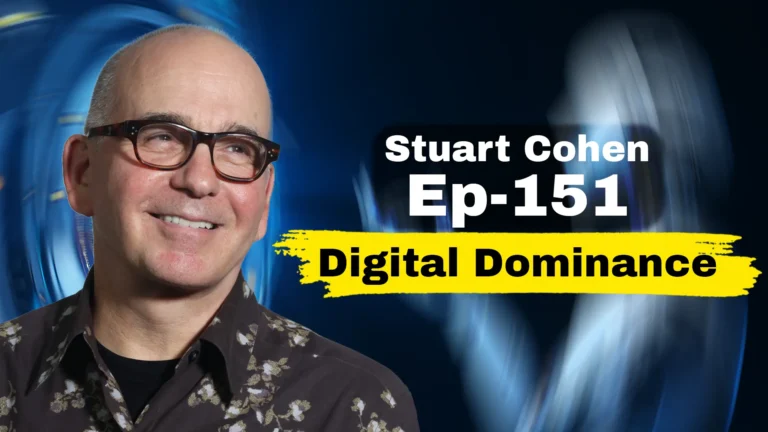
Stuart Cohen
Episode Notes
Summary
In this episode, Stuart Cohen shares insights from his extensive career in photography and storytelling, discussing how media evolution impacts brand communication and the future of content creation. Discover how authenticity, storytelling, and new technologies like AI are shaping the way brands engage audiences.
Takeaways
- Media evolution and its impact on storytelling
- The importance of authenticity and emotional connection
- How AI is transforming content production
- Balancing art and metrics in advertising
- The role of lighting and visual aesthetics in storytelling
- Adapting to changing platforms and attention spans
- The value of apprenticeship and continuous learning
- Strategies for small businesses to create compelling content
Chapters
00:00 Introduction to Stuart Cohen and his work
02:10 The importance of interpersonal communication
04:22 Giving life the shine it deserves in visuals
05:46 Reaching the audience through visual storytelling
07:23 Changing storytelling strategies with platform evolution
08:52 The impact of short-form content and attention spans
11:10 The challenge of brand recognition in short videos
12:08 Balancing art and science in advertising
13:26 The influence of analytics on creative decisions
14:47 The future of content creation with AI
16:07 Using AI to create cost-effective visuals
17:37 AI tools for efficient shooting and editing
19:14 Embracing new tools as opportunities
20:25 The evolution from film to digital
21:09 The democratization of tools and innovation
22:19 The importance of experience and mentorship
23:42 Advice for small businesses on content creation
25:18 Maintaining creative freedom through personal projects
27:02 The value of consistency and long-term storytelling
28:48 Final thoughts on storytelling and authenticity
Links
Website: www.scpictures.com
Website: www.superstock.com
Instagram: @scpictures
Instagram: @superstock_images
Transcript
Jeffro (00:01.907)
Every business on this show is trying to figure out how to reach people through ads, video, social content, whatever the channel of the moment happens to be. Now, today’s guest has spent his entire career doing exactly that at the highest level for some of the biggest brands in the world. Stuart Cohen is a commercial director and photographer and the founder of SC Pictures. His client list reads like a who’s who of major brands with ATT, Coca Cola, Four Seasons, Fritole, and and his work spans everything from heartfelt testimonials to game day humor, real people to celebrities, fashion, kids, sports. He’s gone swimming with sharks in the Galapagos and even staged a musical comedy with the townspeople of Mansfield, Texas. Sewart also trained under legendary photographer Helmut Newton. He studied film at USC and spent decades mastering one specific thing, giving life the best light, literally and figuratively, in a way that resonates with whoever’s watching. So today we’re gonna zoom out and talk big picture.
The evolution of media, how the way we reach people has fundamentally changed, and where Stuart thinks it’s all headed next. So if you’ve ever wondered how the biggest brands in the world think about storytelling and audience attention, this conversation is gonna be for you. So Stuart, welcome to Digital Dominance.
Stewart Cohen (01:12.12)
Thanks so much. That was that was a good intro, man. I appreciate it. The only part is when you said he has decades of experience, which I guess I really do now. It’s start starting to starting to sound like a long time.
Jeffro (01:25.186)
well well I won’t tell if you will. Stuart, I mean there’s so much we could talk about. you know, we mentioned Helmut Newton in the intro, right? You study under him, obviously a very influential photographer in history. what’s one of the biggest lessons from that experience that still shows up in your work today?
Stewart Cohen (01:43.566)
Well think I think that the Helm Newton experience and the apprenticeship world really shapes a person. And and and I will say that I think the apprenticeship world is going away in today’s digital world. And to me, looking back, I wish I had stayed in that in that phase of life longer. So I worked for a couple of big name photographers, and then the last guy I worked for was Helmet.
Who was a legend and who probably taught me the most. And it was the simplest. It was less technical, which I had learned already, but it was more about just how to be a great person and how, you know.
Intercom interpersonal communication really drives everything. And you don’t need a big ego. You don’t need to be an ass. You could just be a great person and people will gravitate toward you. And then it allows room for your work to really show itself. And that was a it it it sounds really simple and it was really simple, but when I look back today, it’s probably what shaped a lot of my success.
Jeffro (02:51.58)
Yeah, and and s things like that, it’s sometimes easy to understand logically, but getting yourself to actually do it practically when you’re in the moment doing the stuff, that’s where it actually gets hard, right? And you have to force yourself to, you know, actually make those changes and think that way. So I I’m curious how you approach such wildly different projects. You know, we mentioned the the musical comedy, but also, you know, shoots for Coca Cola and stuff. How do you keep that creative philosophy and adjust to those.
Stewart Cohen (03:02.391)
That’s true. Yeah.
Jeffro (03:21.115)
You know, such different environments.
Stewart Cohen (03:22.443)
Yeah. Well it it I it actually sounds a lot broader than it is. Cause really i when you really distill down what I do, it’s all about people and it’s all about people interacting with people. So, you know, whether that be you know, blue-collar workers in a factory, real people on the street, models acting out scenarios, or celebrities. I mean, there’s still people. And and coming back to the comment I made about helmet, you know, I think my gift, luckily, is being able to talk to people on the other side of the camera, get them to relax, get them to emote, and and that’s really in the end, what really drives stories. And stories are the things that endure, endure.
Jeffro (04:07.132)
Yeah, that makes sense. And you know, y your bio mentions giving life the shine it deserves as your singular pursuit, right? it’s kind of starting to come through with just the way you’re talking about that. But what does that actually mean when you’re on set or behind the camera?
Stewart Cohen (04:22.881)
Well, I think part of that, and that’s weird because and and that has come out in a lot of different conversations because it’s just that’s just I guess that’s how people’s styles come out. And I always saw things in in the best light as opposed to and and just as an example, you know, sometimes you see some ads or some visuals that are really dark and moody and and and and and gritty, which are great visuals, but somehow my innate vision was to make everything look good. And I think that may be the reason why I had success in the commercial realm, because that’s necess that’s normally what they want to do. and and you know I I learned visuals from movies and TV shows and and just trying to to see how light reacts off people and just make them look good. And I love to do that. And that’s just natural. So
Jeffro (05:21.572)
So there’s a couple of different aspects of storytelling. obviously with visual medium you are thinking about the light and the colors and the balance of the frame and everything. there’s also the message of what’s being said and how it’s conveyed, right? so I’m curious to hear you know, do you ever think about how do I reach the audience? Like what does that mean to you? Or do you kind of is that secondary to everything else?
Stewart Cohen (05:46.72)
No, actually on the flip side, I mean how I reach the audience is the is the most important thing. How do the ca how do the actors, you know, perform? The visual look and feel is something that I think that at this point is a little bit innate and it always was. It’s like I know what I want in the frame. And and an example of that is once the first time I used a DP, a separate camera guy from me framing it when I was just directing. I was standing right next to him and I described what I wanted and we set up the shot. And then I was looking at the monitor and I’m like, dude, what are you shooting? You know, and it was just like his sense of framing, and I’m not saying it was bad, but it was just different than mine. So, so so if I have an innate sense of what I want in the frame and how I want it framed, and right there, I don’t even have I don’t think about it much. I I really don’t. I mean, I I think about it when I’m setting up the shot, but once the shot’s set up and once we know what the camera’s gonna do, it’s really all about performance. Because even if the camera flubs, but the comfort but the performance is great, then it works, you know? but you just need to start from a place that you really admire.
Jeffro (07:07.352)
So does it obviously, you know, working with the big brands with big budgets and full teams, how has the way they approach storytelling changed as attention spans and platforms have changed and gotten more fragmented? Does that matter or
Stewart Cohen (07:23.049)
It does. And I think that’s that’s the that’s the the comment of the of the year. And or maybe it’s I’m just finally it’s sinking into my head because that’s truly it’s it’s really how the public consumes content. And I think, you know, when you go back to I think it all really started i’m just gonna use COVID as an example. That’s when authenticity, you know, when big productions kind of got pushed aside and people were doing really small iPhone even, you know, shoots. And the authenticity resonated with people and brands realized that and and the realness. And and so right there, some of the sh big shiny sets kind of went out the window because you don’t need them. It just needs to be authentic.
Then of course the rise of, you know, call it Instagram or TikTok, where it needs to be fast. You know, it needs to be faster.
And and you know, the the cost for advertising, you know, I used to do we do sixty second spots, then it became thirty second spots, then it’s like thirty with a fifteen, and they only run the fifteen like as pre-rolls, or then even the fifteens to sixes. So telling a story in six seconds is a hard is really hard, I will tell you that. So I think and and even look, I’m the same way. You you consume stuff now so fast, you’re looking at Instagram, you’re looking at TikTok. And just this summer, I just kind of I look at Labor Day, coming back after Labor Day, I look at it like back to school. I look at it like that’s my new year. And that’s always how I’ve have how I’ve gauged my career.
Stewart Cohen (09:06.739)
And and over the summer I was thinking, you know, well, maybe we do really need to rethink some of the editing processes we use. I mean, you know, our our editing style has obviously gotten quicker and and shorter and to the point. But I I just now I want to do it even differently. I want to I wanna start shooting in a way that gets to the point quicker because I think you have to to be successful in today’s market.
Jeffro (09:35.56)
Yeah. Yeah, and that’s interesting. I would imagine you have to decide what formats you’re going to be publishing on first before you actually plan out your shot and your message and everything, because you have to in order to fit it in the time frame, but also to know how you’re going to capture and keep attention over that duration of time. Right? And yeah, and there’s all these courses that’ll tell you what you gotta do. You gotta hook you gotta tease them a little bit and then keep interested and then pay off at the end and and then end, right? And I mean, how do you think about which format actually earns someone attention now or which ones you should be putting in front of people? Because obviously different projects might not feel like they fit in a short reel.
Stewart Cohen (10:06.326)
Right.
Stewart Cohen (10:19.607)
Correct. So well, a couple things there. The different formats, we basically shoot it. We’ll know go hopefully we know going in what formats we’re gonna have to finish it in. So be it sixteen nine for TV, you know, vertical for social. you know, who knows what’s gonna happen with this new iPhone now? Are we gonna start shooting square? You know? right? So I mean, who knows though? I mean, the whole reason we started going vertical is because of the iPhone. So anyway, so we hopefully no go.
Jeffro (10:41.646)
I hope not.
Stewart Cohen (10:52.271)
in what formats we’ll finish in. So when we’re shooting, we protect for it. that’s that that’s a technical thing. But in terms of the hooks, you know, it used to be you tell a story and then the payoff is at the end. You know, there’s the company logo and you know General Motors making it safe for you, whatever. Now especially for some of the social sting, like the the logo and the name and the brand recognition needs to happen in the first three seconds, or you lose the person, which really throws the whole advertising concepting on its head and it really makes it a more of a challenge for for the advertisers and or the ad agencies, the writers, the creative directors to come up with stories that that lead with the brand, you know? And I think in some instances it works, some instances it doesn’t. I think some of the creativity you know, so much of of today’s marketing is done by metrics and analytics. So, you know, the special sauce is how do you make something great that actually does work within the analytics? Because so many ads that we’ve seen over the years.
Maybe they did not test well, but they r they the audiences reacted to them. You know, so it’s I don’t know what’s going you know, if the analytics are really putting people more into a box.
Stewart Cohen (12:20.459)
You know, and sometimes I I feel it, sometimes we’re doing stuff that yeah, you don’t think it’s great to begin with because the analytics are driving it. It’s like, no, you need this logo here now, you know? And and and you continually try to make those stories work within the confines of the of the brief.
Jeffro (12:41.806)
Yeah, and as you were talking, I’m thinking about how no video is itself an art medium, but advertising is both an art and a science with all the metrics that you’re talking about. And so if you can find a way to get the art to align exactly with the metrics, then you’re gonna have something that’s great and memorable and and lasting. So that’s obviously you know a big challenge, to not get pulled too far in one direction or the other. Because if you’re too artistic, then you’re not gonna hook people in the beginning.
Stewart Cohen (13:01.323)
Exactly.
Jeffro (13:11.331)
You might have this grand thing that, you know, builds to some crescendo but no one’s ever gonna see it. And so you kind of ha and you if you get too far in the other direction with just the metrics, you’re gonna be like cut, cut, cut, cut and people are like are getting seizures from like I can’t follow what’s happening.
Stewart Cohen (13:11.68)
No.
Stewart Cohen (13:22.466)
Yeah.
Stewart Cohen (13:26.306)
Well, there is a lot of that going on today, as you know. And and we’ve gone through phases that gets cut, you know, you know, fast cut, shortcut, then it’s like one take, and and and I again, it comes down to can you tell the story in, you know, in within the confines without making people crazy, you know, and
Jeffro (13:29.071)
Yes.
Stewart Cohen (13:47.618)
Look, we are in the commercial advertising world. We’re trying to entertain people by promoting brands. And I think I you you have to understand that if you’re in what I do. You know, there are a lot of people in our industry, it’s like, no, but I really want to go do features or I want to do indie features. I’m like, well that’s really cool. But I’m in a I’m in the commercial space. So I feel like if I could be successful telling a complete story for a brand in 30 seconds that has a beginning, a middle, and an end.
I’m happy. I think that’s great. Now it’s like, can I tell a story in 15 seconds? And you know, a lot of times we can as well. But again, you know, knowing what you’re trying to deliver going into it really helps.
Jeffro (14:34.296)
Yeah, and and you wanted to talk about where this is all headed, right? So l let’s hear it. You know, what’s your prediction for where content, media, and brand storytelling are going next?
Stewart Cohen (14:47.159)
Here I’m gonna start with the end because I really believe this. In the end, people react to stories. So if we just put that out there and and think back through the continuum of the hundred hundreds of years, it’s stories that people react to. It’s how they’re being delivered. So, and of course, everybody loves talking about AI, and I’m okay talking about AI.
I feel like it’s an amazing tool. It’s truly an amazing tool. I feel like it’s a little bit, you know, it’s the Wild West today. It’s a little bit unharnessed. you know, I I I still feel like some of the people, the renderings of people, I don’t buy. I don’t buy the nuance, the skin, stuff like that. But there’s some shots that just work doing AI.
We just completed a spot that’s gonna run for Christmas that on the board was, you know, this this drone shot pulling out and you see a neighborhood, you know, and it’s dusk and it’s snowing and the warm lights in the windows. And we looked for stock, a stock clip to try to use, couldn’t find it, and we created it in AI. And then what we did do is we actually used some film techniques as well to really rough it up a bit so it didn’t look like AI, you know.
So it had grain and stuff like that. And I gotta tell you, I bought it. Like, not even a question. And I’m thinking, holy crap, we got it done. And it looks great. And, you know.
Yes, it took away from a day shooting somewhere in the winter, but you know, but it works and we did it today. So I’m a believer that things like that are really gonna change how we do how we how we produce. I think we’re gonna need less time on set, which for advertisers means less cost. I think there’ll be more editorial, you know, more time spent in post, but you know, which is
Stewart Cohen (16:49.89)
You know, it’s expensive, but it’s not as expensive as shooting. And and we’re gonna find a hybrid way to produce things that is gonna be exciting. I mean, think about it, like creatively, the sky’s the limit now. Like, you know, if if you have two people, you have you and I, you you know, the two of us are talking, you know, we could we could be in a space capsule, you know, and
Jeffro (17:13.002)
Mm-hmm.
Stewart Cohen (17:13.556)
Nobody and does anyone care if what we’re seeing is cool? No. They don’t care if you’re in a space capsule or on horses in the wild west. so I think it’s gonna be really exciting. Another thing, and and I will say I have not used this this software yet, but I was privy to a demonstration of it, this French company that have created this software that say you do a master shot. So say there are the two of us walking down the street. We shoot it, we’re walking, talking.
Then what they’re able to do with their AI is like if you want a side angle, like a BCAM angle, they could create an AI. If you want a top-down, like a drone shot, they could create an AI. So all your coverage is done. So you only need to shoot the masters. So again, what that’s gonna do is really, really save on production time. Now, of course.
Jeffro (17:57.082)
Yeah, yeah.
Stewart Cohen (18:10.356)
Once again, I’m gonna say, like I hire a lot of crews and a lot of my friends are crew people. The amount of of time it takes to shoot a movie or an episodic or a commercial, I think will come down.
So, you know, if you have a three-day shoot for a commercial and it could become a two-day shoot, well, that saves a lot of money for in production. And but again, it’s exciting because we’re gonna be able to we have all the pieces and we could create whatever we want and post. And and hopefully it’s gonna make our editing more dynamic, our storytelling hold together.
You know, there’s no more missing shots. So yeah, I’m I’m I’m optimistic.
Jeffro (18:55.483)
That’s cool. Yeah, and and I tend to have that view as well, that it’s more of a tool, it’s how you use it, it’s not necessarily an existential threat. Like yes, it’s going to cause changes, but that ultimately can be a good thing as long as you are still, you know, taking it for what it is, right? Not not a replacement.
Stewart Cohen (19:14.732)
Ye i it’s it’s it’s exactly that. It’s how we frame stuff, how you use it and and have an open mind, you know, to to trying new things because you know everything we’ve had so far has made it better.
So and when going back to your comment about I’ve had decades of experience. So I did I did I did start in film, like on film, using film, editing film, like actually splicing film, cutting it and piecing it back together. That was school for me. And it it like an avid machine, like so nonlinear editing came out.
Jeffro (19:36.709)
Ha ha.
Stewart Cohen (19:55.277)
Like right when I got out of school. So so I never in the professional world I never cut film. I only cut real film in school. and luckily enough it got to, you know, nonlinear editing, which was revolutionary at the time. Like I remember the old school guys thinking, my God, you know, but it was great. And then, you know, we went through the digital revolution, which I w by that time I was behind because all my film friends who said, that’s never gonna happen, that’s never gonna happen.
It happened in stills, but it’s never gonna happen in video. I’m like, guys, and mark my words. And and and even today, you know, there’s a lot of nostalgia around film and people using film, and which is great. I’m just you know, I feel like I could achieve the looks I want using a digital medium.
Jeffro (20:30.361)
Coming.
Jeffro (20:47.129)
Yeah, I think it’s it’s like with many things, it’s who’s driving the tool, how you’re using it. You need to know how to prompt it, what you’re asking, what you’re looking for, because two people using the same tool are gonna get very different outputs just because one has the experience and the gut feel or whatever, and the other is just like, make it for me, go. And you’ll get something, but it’s not gonna work the way you want.
Stewart Cohen (21:06.263)
Right.
But a and you know the other thing is this whole s I’ll I’ll call it the equalization of tools like anyone has the tools today, and the the cost of entry into the industry, like we’re talking about school and apprenticeship, you know, which you don’t really need anymore. I mean, I still believe in it, but it allows innovation to come from anywhere. And I think that’s exciting. You know, because if you know you’re a 15-year-old and you innovate and you come up with something great, I mean it’s like, wow. And and you know, maybe 20 years ago, 15 years ago, 10 years ago, that may not have been possible. I feel I do feel I do feel like the the back to the whole apprentice thing.
Jeffro (21:54.389)
I have
Stewart Cohen (21:59.991)
Because I still have guys that work for me that have left and we still talk like v nearly daily. Like they’re asking me about the business, about running a business, about you know, the best practices. And I think that’s the one thing we’re starting to see missing in the industry is like cause people come up that just start from nothing.
Which is cool, but again, it’s like the structure of doing business and pricing themselves properly and and you know, having some sort of a standard is not even standardization, but you know, like a norm of production. You know, that’s out the window too, you know.
Jeffro (22:35.927)
Yeah. Well having a frame of reference from your experience is super helpful. ‘Cause yes, you can get a Google answer on what should I price this project at? Like that’s different than having gone through the process looking over somebody’s shoulder and they’re explaining what they’re doing, right?
Stewart Cohen (22:51.52)
Exactly. Yeah. And I find a lot of people, unfortunately, shortchanging themselves, which is unfortunate, you know, because it’s cool when you’re twenty two, but like if you’re trying to make a career of it, eventually you need to earn a living, especially in this day and age of crazy inflation, you know, so
Jeffro (23:14.453)
Yeah, and everything a lot of things sound good on paper, but then when you start doing them, it’s a very different experience. You’re like, I guess I don’t like this. I didn’t realize I was gonna spend this much time doing X, right? So I mean when I was in junior high, I got to shadow some different people. It wasn’t an apprenticeship, but like one day I would go to a print shop, follow the guy around. Another day I I went with someone who does lighting and electrical and they he was working at Legoland because it was new at the time.
That was super cool. Like going in the back little rooms and like see like so stuff like that can spark an actual interest and passion for something that you wouldn’t get from just looking through a list of career opportunities.
Stewart Cohen (23:42.797)
Yeah.
Stewart Cohen (23:53.229)
absolutely. Absolutely. Yeah. Like who knows if I had if I had had like have a day with a neurosurgeon, I might be doing a brain surgery. You never.
Jeffro (23:57.108)
I know.
Jeffro (24:02.624)
You never know. And this is why doctors do rotations, right? Because they get to try it out and figure out what specialty they’re gonna wanna do. So
Stewart Cohen (24:09.614)
Yeah. Indeed, indeed, yeah.
Jeffro (24:13.696)
All right, so let’s bring this back to you know, a lot of our listeners have service businesses. for a small service business who is trying to create content on a shoestring budget compared to Coca Cola or whoever, what sort of principles should they hold on to regardless of whatever, you know, platform or trend comes next?
Stewart Cohen (24:32.664)
Well again, not to sound like a broken record, but I do feel like if you know your brand and you can wrap a story around it, maybe something that’s heartfelt or something that people would react to, I think you’re gonna be successful, regardless of the media. I real I really do feel that. Yeah.
Jeffro (24:50.729)
That makes a lot of sense. I a and like we talked about, you know, stories have been around for centuries, they’re not going away. but you also I know in your business, you know, you’ve had a lot of success, it looks like that from the outside, but there’s also the creative work and I I imagine you want to be able to experiment and try new things every day. So how do you structure your kind of creative business to give yourself that freedom?
Stewart Cohen (25:18.218)
Good that’s a really good question. Well, I have done that my whole career. So and this will dovetail into something else. So you always need to be doing personal projects, I feel. And that’s where you try things out, whether it’s techniques, you know, different looks, working with people differently, so on and so forth. So early in my career, like going back, call it in the early 2000s, you know, I was an early contributor to Getty Images, and they were licensing my work, and they had some amazing researchers and so when we weren’t shooting jobs that I was getting paid for, I was paying to go out and shoot projects on my own based on their research. And then I would turn those into them and they would license them. And actually I was I was making a pretty good money off of them. But it was also helping me evolve my style and look and feel. So I’ve never really stopped that. I’ve continued to always be trying different things and keep working and you know.
Going crazy and some things work, some things don’t work.
Jeffro (26:31.344)
Yeah, I think that’s something that a lot of small business owners could take away because I think there’s a pressure like, I’m gonna make an ad, it has to bring in customers, right? And so you’re less likely to be as creative. You’re like, I want something that’s gonna work and there’s you can’t really guarantee that and it’s hard to kinda get past that mindset frame when you are just like, Okay, this needs to bring revenue, otherwise, you know, I’ll pay for a video, if it works, I’ll do more. If it doesn’t, I’m not gonna do any more. how do you help someone who’s in that situation to kind of move past that.
Stewart Cohen (27:02.818)
Well, I I do think I do think that holding a if you have an idea, a concept, and it works, you have to stick to it. You know, and you have to stick to it, you have to give it some time to breathe. Because by the time you’re sick of it the general public is seeing it for the first time, you know, and and and you think of long-running campaigns. And I always use this example and I feel dumb using it, but like some of these insurance things, like the emu or or flow, you know, I mean, they h hang on to this stuff for like five, seven, ten years. And whereas a lot of these companies now, the s the average tenure of a CMO is something like three years. And and if you think about a three years to tell a story, get it in the market. and to be successful, it’s really, really hard. And then so I I think the people above the CMOs that come in and fire them because they say it’s not working, well they’re they haven’t given it enough time. So I think you gotta find your core value and you have to stick to it. and and hopefully you could find an audience.
Jeffro (28:10.894)
Yeah. Well, I appreciate you being on the show today, Stuart. This has been a fascinating kind of change of pace. We do a lot of conversations about tactics, you know, what to optimi o automate or optimize and you know, what to spend on ads. But I think it was good that today we were able to talk about something that’s underneath all of that, which is actually capturing someone’s attention and making them feel something through a story. So I mean whether you’re Coca Cola or a local age fat company, the fundamentals that we’re talking about, the authenticity, giving your story the best light, understanding how people actually pay attention, these apply regardless of your budget or platform or anything. So Stuart
Stewart Cohen (28:48.546)
They r they they really do. And and and you know I’m just finished this. Before you throw money at it, make sure what you’re throwing money at is really viable.
Jeffro (29:00.183)
Yeah. And Stuart, for people who want to learn about your work or S C Pictures or anything, where should they go?
Stewart Cohen (29:07.648)
Easy breezy. Well, you could always reach me at Stuart at stewartcohen.com. That’s my email. S-T-E-W-A-R-T at stewartcohen.com. website S C Pictures, LinkedIn, Stuart Cohen, Instagram, S C Pictures. I’m always open to talk, work, do whatever. So yeah.
Jeffro (29:27.2)
Awesome. I appreciate it. and before I end this episode, I wanted to ask one final question. We always hear in advertising that sex sells, but I’ve also heard that if you have that element in your ads, the focus is on that model or whatever rather than the product. And so it’s actually not as effective for selling the product as it is for getting people to watch the ad. So I wanted to hear your take on that.
Stewart Cohen (29:56.022)
Wow, that I’ve never heard it. Well, I know sex sells, but but I sometimes think I didn’t use enough sex in my ads growing up. but but look, you want eyeballs, right? So okay, if I watched something for the first time and it was sexy and I I kept watching it because it was, you know, I’ll watch it again.
So, you know, at one point you’re gonna you’re gonna understand what they’re trying to sell. So I don’t know. I mean, I I think, you know, is I don’t even think it’s you know, it’s not a puppy and it’s not a baby. Babies and puppies all sell also, you know. So who knows? but anything visually appealing will keep people’s attention. We’ll leave it at that. Yeah.
Jeffro (30:44.01)
Makes sense. All right. Well thank you, Stuart. And again, for those of you listening, before you create your next piece of marketing content, just ask yourself, am I giving this the best light or am I just kind of checking a box? And that distinction is very important because it separates the content that people scroll past from content people actually remember. So make sure to leave us a review, share this episode with someone who will find it interesting, and we’ll see you next time. Take care.
Stewart Cohen (31:07.0)
Take care.
Jeffro (31:10.228)
All right.
More Episodes


© 2016 – 2026 FroBro Web Technologies
27472 Portola Parkway #205-241, Foothill Ranch, CA 92610